
Spoilers for Project Hail Mary follow. Warned, you have been.
It’s kind of a bummer that, in bringing Andy Weir’s Project Hail Mary to the screen, screenwriter Drew Goddard (who also penned Ridley Scott’s adaptation of The Martian) and the quality-seal director pair Phil Lord and Chris Miller had to give away the story’s big twist much sooner than in the novel. I can’t describe to you how revelatory that moment was while reading the book a few years ago, turning what initially looked like Weir trying to “return to form” after Artemis, his second novel, was coolly received, into one of the best sci-fi buddy comedies in God Knows How Long. It was an accessible, engrossing tale — perfect for a beach or airplane read, and even better to imagine as a full-fledged motion picture. The fact that all involved managed to do the story justice and make it cohere better than the novel is a genuine feat, rock-monster surprises be damned. This is in no small part due to the efforts of the previously mentioned brain trust, a brilliant Ryan Gosling, and a team of VFX artists and puppeteers, all of whom make Project Hail Mary into an emotionally resonant, funny, and thrilling example of blockbuster sci-fi at its present best.
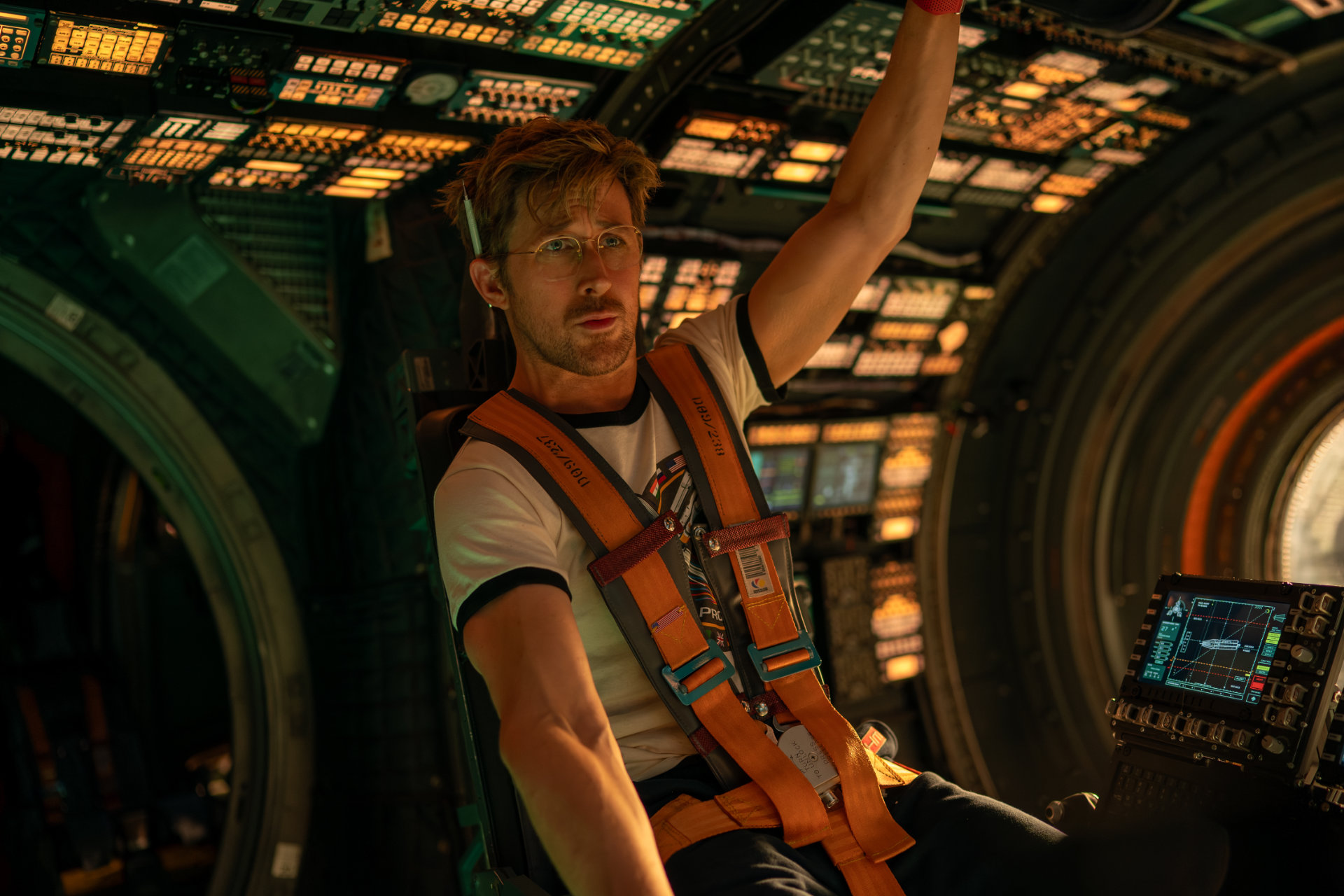
Those are big words, but the “blockbuster” deserves emphasis — it has the kind of broad appeal that classic Spielberg had without fully relying on winks and nudges to The Beard, despite one silly reference to Close Encounters — and it’s hard to think of a concept less ready for prime time than “Enemy Mine if Dennis Quaid were a middle school science teacher and Lou Gossett Jr. looked like a rock crab and didn’t have children by budding.” But it works, primarily because Gosling is perfectly cast and ferociously committed to the bit. He is essentially the perfect Weir protagonist, embodying Ryland Grace with the requisite goofy charisma honed over years of teaching kids about the wonders of science and the chip on his shoulder from being blackballed from the science world. But that’s all in the past when we first meet him — he doesn’t even know his name until at least ten minutes into the movie. Such is what happens when one wakes up from cryo-sleep aboard an experimental interstellar vessel, acting like Leo when the ‘ludes kick in during Wolf of Wall Street.
That, paired with the temporary amnesia, is disorienting enough, but his situation is particularly bleak. He’s light-years away from Earth, and every other member of the crew died on the trip. Worse, as his memory starts to come back, he remembers that the Earth is depending on him to solve the Mother of All Problems: a swarm of alien microbes, dubbed the Astrophage, is eating the sun. Hence, Project: Hail Mary, a last-ditch effort by humanity to save their dying star, which he, for reasons not immediately apparent, wound up as an essential part. Plucked from obscurity by Eva Stratt (Sandra Hüller), the head of the task force responsible for finding some solution to this problem, Grace contributed plenty to the effort to identify the organism and develop “a concept of a plan,” which is to go to a nearby system whose star remains untouched by the Astrophage and, well, figure out what makes that star so goddamn special. That’s a lot to ask of a guy who’s slowly putting his brains back in order, much less one who is realizing that there’s no real return ticket for this one-way trip.
Yet — in that great twist I mentioned above — it becomes quickly clear that he’s not alone. It’s hard to ignore the giant, bizarre alien ship that’s hanging out in a similar orbit, much less that it seems to be following him and the Hail Mary around. Aboard that ship is a ‘lil guy in a very similar situation: last astronaut, dead crew, dying star, best hope. The big difference is that he looks like a rock crab, with several little legs, some body art, and no discernible facial features; delightfully realized through a combination of CGI and puppetry by the stellar work done by the VFX crew. After some skepticism and initial communication issues, it becomes clear that they’ll have to work together to solve this problem and save their worlds, and Grace decides to accept this creature’s help. He dubs him “Rocky,” and the two essentially bro out while they figure things out and, you know, try not to get one another killed before they’re able to find out why this star is so special.
What makes Weir’s stories so compelling — and what The Martian captured so well and why Artemis failed — is that they’re a novel iteration on the survival story, Robinson Crusoes in space, where the satisfaction comes in watching a capable protagonist overcome obstacles that would seem insurmountable otherwise. Where Hail Mary differs and improves upon The Martian is in its emotional core and, importantly, its keen sense of wonder. Gosling’s astonishment at the wonders he’s shown never ceases — and, perhaps, it’s more wondrous to see something other than orange dust — and his acclimation to his bizarre circumstances is very, very funny. By the time he’s recording Real World-like diaries about how annoying Rocky is as a roommate, the spectacular has become endearingly mundane (made even more so by the fact that, given that Rocky essentially sees through sound waves, the ‘lil guy is always aware of whenever Grace is talking, no matter if he’s whispering or not). Their delight in one another’s quirks and ability to work together give Hail Mary a kindness that, again, feels Beard-like or out of early Pixar — light in sensibility, with worthwhile depth to its characters and their relationship.
Lord and Miller bring the spectacle they’re known for in their animated work to live-action without sacrificing quality. There are both astonishingly beautiful sequences (such as the moment when Gosling sees, in infrared, a swarm of Astrophage surrounding him on a spacewalk, like a miniature starburst) and tense, armrest-gripping set pieces. Goddard can distill the best elements of Weir’s writing — his pacing, his concepts, his plotting — while jettisoning the elements that wear a reader out (the perpetual exposition and science explainers, the Reddit humor), and can root all of Grace’s immaturity and gags in a way that complements his background. I say this to preempt complaints about the Millennial Speak humor*and to stress how well-considered the choices are here. It’s a movie that gets away with musical sins because it’s so damned earnest — a character does Harry Styles karaoke, and it lands, and somehow Lord and Miller pull off the rarest of all feats in landing a Beatles needle-drop — and it all does so with a certain amount of grace.
It’s been somewhat disheartening to see the “dark forest” interpretation of first contact take root in recent years, with The Three-Body Problem and its sequels offering an intellectualized variation of galactic MAD befitting a world falling into a Cold War trap, and it’s refreshing to see a smart bit of populist entertainment that doesn’t buy into that line of thinking. There’s no real power imbalance between Grace and Rocky — just complementary skillsets and stakes worth fighting for, clear enough to both to cause any bullshit to fall to the wayside. Its hope and faith in the fundamental goodness of friendship, embodied by Gosling and his rock crab pal, is infectious, and Project Hail Mary is an utter delight as a result.
* Which, millennials and elder Gen Z, you have no one else to blame for extending this tone to the whole of pop culture before deciding that alienated absurdist disaffection was somehow the One True Language Of The Internet Age and revoking its “cool” pass.