
Editor’s Note: Vanyaland film editor Nick Johnston has left the country, posting up this week in the Great White North to cover the 51st Toronto International Film Festival. As usual, and perhaps now more than ever, we wish we were up there with him! Check out our continuing 2026 coverage, get rolling with our official curtain-raiser, and revisit the complete Vanyaland coverage archives from past TIFF editions.
Andrew Haigh’s A Long Winter is probably the best January movie I’ve seen in some time, and I don’t mean that in the traditional “let’s dump all of the garbage on our slate” sense that distribution would assume. I mean that it’s a slow-paced bummer about trying to keep one’s light aflame in the face of the bitter cold that’s beautifully shot, performed by a talented ensemble with genuine sensitivity, and utterly devastating in its own quiet way. In short, it feels like the world feels come January 10, when the days are short, the sun is hard to come by, and the roads and sidewalks are covered in snow and muck. All of the holiday joy is in the rearview, and all you have to look forward to is a spring that never can come quick enough, a thaw that’ll bring out the vultures to circle the defrosting corpses of those creatures unlucky enough to get caught out in a blizzard. So, yeah, it’s kind of a heavy watch, but one that’s worth seeing through.
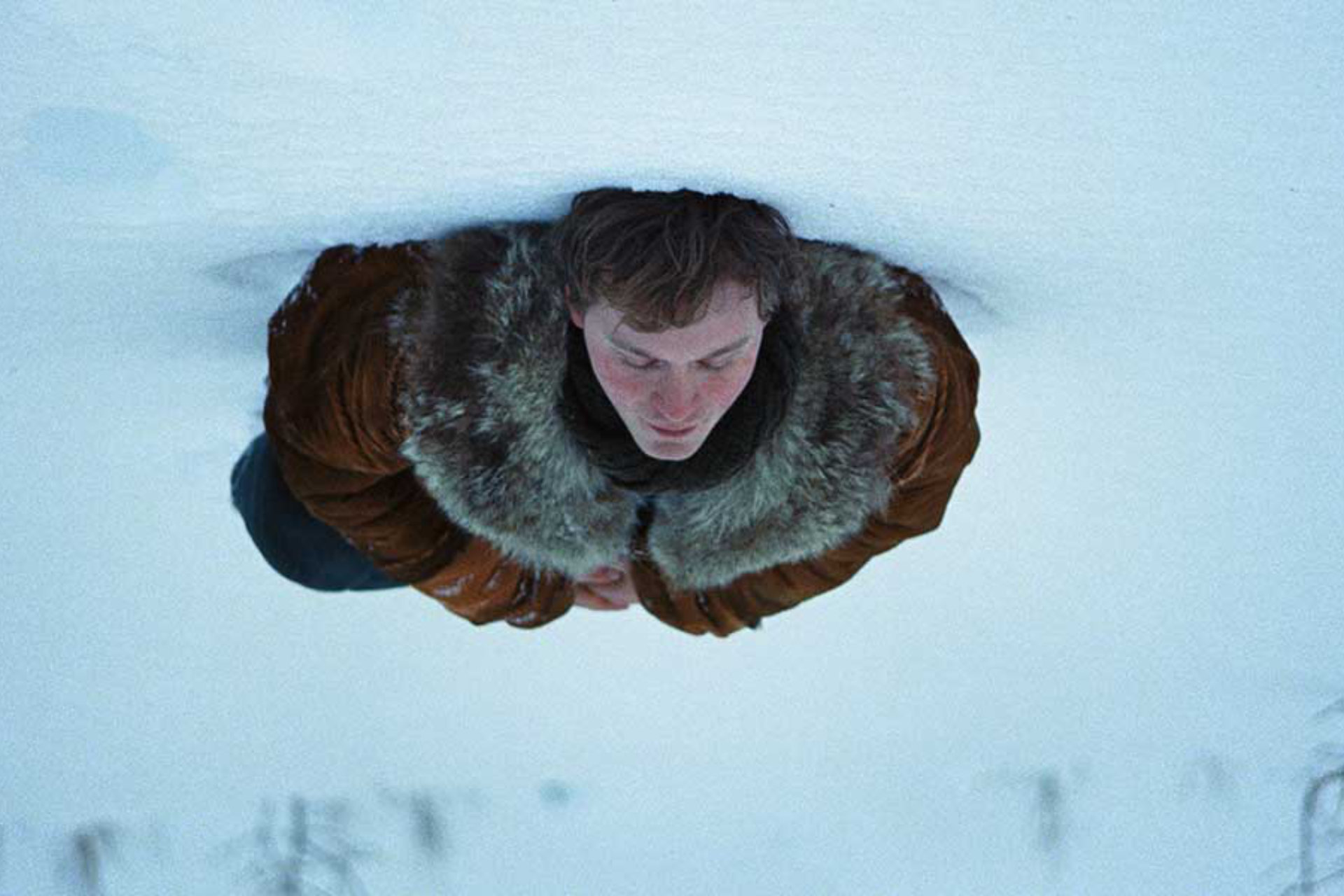
Based on the short story by Colm Tóibín, A Long Winter follows Mike (Fred Hechinger), a young man who knows how hard a Colorado winter can be. He’s had a content little life in the Rocky Mountains, living in an idyll with his mom, Louise (Caitriona Balfe), dad, Lester (Ebon Moss-Bachrach), and younger brother Tommy (Kit Conner) in a house they built themselves. To be truthful, they’ve been living his dad’s dream the entire time – Lester moved away from the hustle and bustle of New York to find some sort of peace up above sea level – and, for the most part, it’s been a happy time. Something changed, however, when he spent some time working on farms in Idaho, but he doesn’t know exactly what it was. Perhaps it’s that Louise and Tommy have unrealized dreams, and only Tommy seems to have a chance to realize them. It’s the early ‘50s, and he’s been drafted to fight in Korea, which is a one-way ticket to new lands, opportunities, and perhaps a family of his own. Though he empathizes with his brother, Mike just wants things to stay as they are, and his whole little world seems to collapse right after Tommy takes his leave.
Louise has lived in these mountains her whole life as well, seduced as a young woman by the city boy’s mystery without realizing he’d given up the “city” part of the moniker. She wanted to go far away, but the furthest she got was the other side of the mountain she grew up on. Her pleasures are few in number: Her one gateway to the wider world – an issue of Cosmopolitan – is something she has to purchase in secret, and though she does love her husband and her sons, it’s just not really enough to quench her thirst for more. Hence, she drinks. She drinks enough that she had to dry out at her doctor’s insistence, and she’s gearing up to hop back on the wagon. Lester, trying to do what he can through imperfect means, dumps out the booze she purchased to last her a bitter winter, and it shatters something inside of her. During the first big snowstorm of the season, she takes the family dog for a walk and vanishes into the blizzard-like conditions. Mike and Lester do their best to find her, but the storm is too severe, and their car isn’t equipped for it.* So begins a search that will last until springtime, as Mike takes it upon himself to find her. Lester knows it’s probably too late for that, but his son won’t hear it. The mountains call, and maybe he’ll find her.
Also responsible for one of the great Morrissey needle-drops in film and television history, Haigh crafts fascinating three-dimensional characters who feel like they go on living even after the film ends. It’s a talent he first displayed when Weekend premiered back in 2011 and hasn’t disappeared in the interim. A Long Winter is no exception to this rule, but his task is harder, though it’s a problem often faced by filmmakers attempting to translate a novel or short story to the screen: how does one craft a protagonist who feels more than he thinks without having him look like a slack-jawed moron to the less-charitable members of the audience? To contrast it with another rural 20th century tale of quiet majesty and woe: Clint Bentley’s Train Dreams had more than enough going on – an entire lifetime’s worth of characters and events – and had plenty of stimuli for Joel Edgarton’s protagonist to stoically react to, not to mention the lush Will Patton narration endowing the images with meaning straight from Denis Johnson’s pen. Haigh has significantly less to work with here – a smaller cast of characters, a single winter’s worth of events, and less writerly intervention – but he has Hechinger and Moss-Bachrach, and that proves to be enough.
I can’t stress enough how much this movie leans on Hechinger’s ability to suggest that Mike feels a situation before he understands it, and how well he portrays the sadness that comes with this strangely tragic condition. He’s seemingly always on the periphery of some secret that no one thought to tell him, such as his mother’s alcoholism, and the nature of his family dynamic means that the details are only revealed to him long after some dire event has taken place. It’s not that he’s ignorant or dumb – he notices how much she drinks – it’s just that he wants so badly for things to stay the same, for his folks to continue being as they were, for his brother to be able to coax the chickens into consistently laying eggs, for there to be some peace. In a way, the entire feature is about him fighting that impulse, feeling that his mother is probably dead, buried in the snow, but wanting to believe that she might have survived. The fact that he can suggest all of that without narration or extended dialogue, through a seemingly implacable expression and his wide-eyed absorption of the world, shows he’s a major talent.
The film does take its sweet time reaching its conclusion, and Mike’s budding romance with a young man (a swell D’Pharaoh Woon-A-Tai) hired to do the housework feels a bit too slight for the depths Haigh wants to reach, but goddamn if it ain’t immersive. There’s a hypnotic quality to Andre Turpin’s cinematography – the warmth of candlelight and incandescent bulbs on wooden rooms, the majesty of the snow-covered mountains, the detail on each face he frames in a close-up – that is enhanced by Paul Haslinger’s graceful score, and it’s just a pleasure to look at. One can practically feel the temperature in the theater drop by twenty degrees over the course of the film, as if we were up in the Rockies with them, searching for things we know we won’t want to find in the end.
* I was genuinely stunned to see Haigh pay tribute to Clouzot and Friedkin with this sequence – there’s a light Tangerine Dream-like synth that plays as Mike tries to push their truck out of a skid on a winding mountain backroad.