
Editor’s Note: Vanyaland film editor Nick Johnston has left the country, posting up this week in the Great White North to cover the 51st Toronto International Film Festival. As usual, and perhaps now more than ever, we wish we were up there with him! Check out our continuing 2026 coverage, get rolling with our official curtain-raiser, and revisit the complete Vanyaland coverage archives from past TIFF editions.
Out of all the possible controversies that could have come out of this year’s Cannes competition slate, that we’d be litigating whether or not one of the titles had “bad” visual effects wasn’t even in the same zip code as my bingo card, much less on it. It’s happened a few times – anybody remember the bizarre dunks on Terrence Malick for the dinosaurs in The Tree of Life? – but then again, nothing about Na Hong-jin’s Hope is predictable or can be expected. The fact that this high-flying, propulsive, and hilarious sci-fi actioner was in the running for the Palme? Unexpected. How thoroughly engrossing its action sequences are? It absolutely caught me off-guard, and that’s with the five-month hype lead time. It having what might be the best shit joke in film history in it, one that goes on for a gut-busting ten minutes? Yeah, I think you get the drift. It’s embarrassing that VFX work has prevented (and will prevent) some folks from properly enjoying this bloated, delightful, balls-to-the-wall and deeply nuts movie.
The Hope of the title refers not just to the life-sustaining quality of wishful longing, but to the small South Korean town of Hope Harbor, right near the DMZ. It resembles a lot of old industrial centers in the Midwest – a population of the aging and elderly, slowly vanishing from memory as the young have headed off for better opportunities in the cities – and has a tiny police force. There’s Bum-seok (Hwang Jung-Min), the experienced-but-less-than-grizzled police chief, Sung-ae (Jung Ho-yeon), his newest hire… and that’s almost it. Hope Harbor doesn’t need a ton of cops to look after it. Well, at least until the citizens meet their new neighbors. Meat, actually, is the first sign that something strange is afoot. A gang of hunters, led by the courageous Sung-Ki (Zo In-sung), stumble across a cow that has been absolutely torn to shreds by an unknown attacker, and he lets the chief know that there’s a “tiger” on the loose. It seems a bit weird to the chief, but hey, he’s a cop. Bizarre things are just a part of the day-to-day.
What isn’t a part of his routine is what happens next, less than 20 or so minutes into the runtime of the film. Hope Harbor comes under apocalyptic assault by the “tiger,” which is strong as hell, nearly faster than his police car, and can shrug off fire from pistols and long guns. It is a whirlwind of destruction, and all Bum-seok can hope to do is survive. He’s joined by the Colonel (Lee Sang-hee), a retired military man with whom he develops an easy rapport, and the pair of them goa-hunting wabbits, bickering and bantering along the way. Na keeps the creature hidden, using the Tasmanian Devil-like chaos it causes to firmly root us in Bum-seok’s perspective, and it’s once the monster is revealed that, sadly, plenty of folks will jump off of the Hope train, despite how utterly masterful everything up until that point has been. The “tiger,” it turns out, is the second-youngest of four giant aliens who crash-landed in the mountains near Hope Harbor, who are in the midst of a conflict our leads can only vaguely comprehend. They have little time to deal with mammalian bullshit, but here they are. It’s up to our goofy leads to figure out what the hell is going on, and how the hell they can stop the complete-and-total destruction of their town.
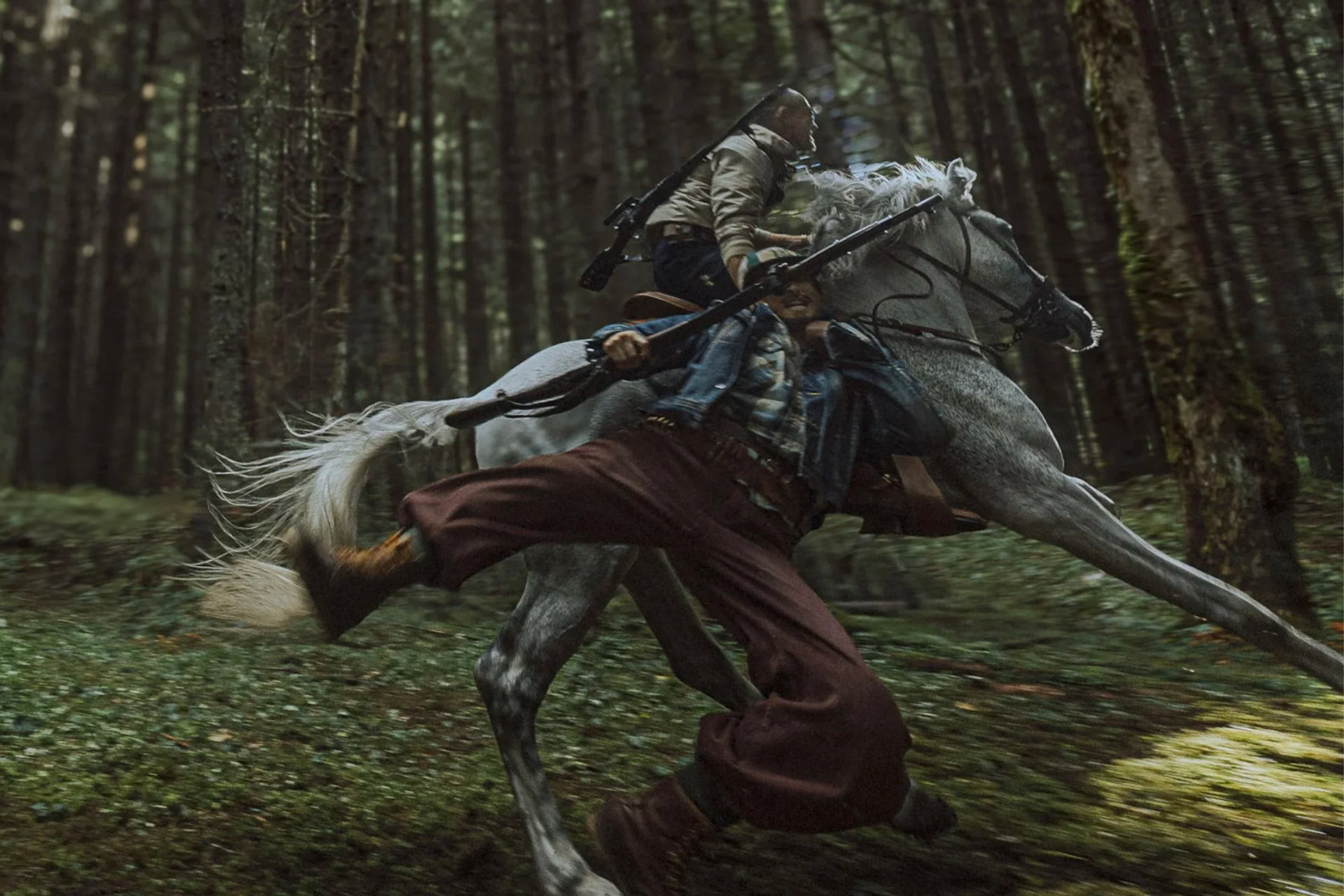
Again, I can’t stress enough how engrossing and enjoyable Na’s work here is, and even at a 150-minute runtime, it only occasionally tests one’s patience. The action is ferociously maximalist, hitting anime-inspired beats and levels of near-Bayhem rarely seen in international productions, and, importantly, it doesn’t feel truncated. Scenes play out as long (or even longer!) than they need to. There are two fantastic car sequences – both, of course, involving the lone squad car that the force has – and even some good stunt horse-riding, when a gang of equestrian “gentlemen” hunters comes on to the scene to hunt some big game. The humor is top-notch, with the previously mentioned shit joke being informed by the same more-is-more ethos as the action, and it only gets funnier as Na refuses to cut. There’s fantastic practical effects work, with an autopsy sequence that’s as tactile as the digital effects are unreal. In short, it’s a two-hour-and-forty-minute action movie that never lets off the gas and never bores you. Why, then, do the VFX matter so much?
Part of that is pedigree: this is an expensive film, the highest-budget in Korean cinema history, and one has to wonder where the money went. Forget about the destroyed town and countless extras and the Hollywood actors doing the mo-cap (Michael Fassbender, Alicia Vikander, Cameron Britton, and Taylor Russell put on the dot suits) – CGI, really, is where the whole of a movie’s budget goes. Another is this bizarre fetish we have for photorealism, which has begun to have truly diminishing returns. It’s similar to gaming: there are a bunch of “beautiful” games that take full advantage of modern consumer graphics cards in their visuals but play like dogwater, and “dated” games that hold up and are emulated (literally and figuratively) by players and creators. I don’t think there’s a major difference between what Na does here and how and – gasp – James Cameron uses digital effects in the Avatar films Both are window-dressing for solid stories and well-executed action. Both are unreal in their own particular ways, and straddle the uncanny valley when flesh-and-blood actors interact with them. The strangeness, for both Cameron and Na, is the point, though Cameron wants to entice you while Na wants to repel you, stressing the humanity of Hope Harbor through an intense contrast with the aliens.
So, like The Tree of Life’s dinos, I have a weird feeling that this will be a flash-in-the-pan criticism, especially once a little time passes, and Hope hits whatever streaming service it winds up at following its theatrical run stateside. That is the true test of visual effects work: whether it looks good when you’ve got the living room lights on, have it playing on a shitty TV, and can press pause on any given frame – you’d be surprised how much mediocre CGI benefits from the theatrical experience – and I think it’ll reveal one key truth. That is, of course, that Na has made one hell of a motion picture, and that Hope is one of the strongest action releases of the year.