
If the ‘20s are the manifestation of all that’s wrong with the United States, the Aughts were a preview of coming attractions. Things were falling apart, but the center held for another decade and change before the varnish painted over the neoliberal consensus fully wore off, when, in grief and fear, we squandered the opportunities presented to us by a unipolar world in which the US was in charge. Charlatans abounded in a make-believe fantasy of moral clarity and righteousness— with all the grifters abounding today, ready to sell you a supplement or a course on how to use AI to make quick cash right now, it’s easy to forget how far the rot went in the first decade of this century. We wanted heroes and protectors to guard us from those unknown forces lurking in the shadows, something to protect us from what we thought was right around the corner. Never mind that the monsters were here with us all along, or that some of the standard bearers were themselves committing unspeakable acts: we wanted bullies. It was a mean time. The hurt went so deep. The body count overseas kept rising. The writers were threatening to strike. Reality TV was becoming a bigger part of the country’s media diet. Chris Hansen saw his moment and knew how to entertain a primetime audience in the modern world.
Hansen was an old-world television creature who knew how to navigate the 21st Century. He looked and sounded like a newsman, his over-enunciated speech straight from broadcast journalism school dictation classes, vaguely handsome in an oversized suit, exuding purpose and control even when dealing with some of the worst adults the world had to offer. They were would-be child molesters using a new and often-misunderstood technology to prey on tweens and teens, who would be lured to a bait house by the vigilante group Perverted Justice and exposed on camera for a national audience, their black hearts bare for the world to see. And Hanson was there each time, the arbiter of righteousness, to prevent any harm to the child decoy—an adult actor posing as the would-be victim. No judge was needed, as this was Hansen’s jurisdiction: The court of public opinion.
He’d probe at their edges, find their pain points, and render them helpless, shattered egos to be swept up and put in the back of a cruiser by a cop inexplicably wearing a Ghillie Suit. Those surplus “domestic security” funds had to go somewhere, after all — you can only buy so much riot gear or have enough parking for armored trucks — and better yet, they could project strength to the viewers at home. Who cared if any of these child predators ever got convicted or whether or not a genuine jurist used words like “entrapment” when throwing out their cases, putting them right back onto the streets? Though many clones have tried, Dateline NBC’s “To Catch a Predator” segments are impossible to fully replicate. Attention is too fragmented now — this was back when a weeknight primetime NBC meant something — and Hansen behaved as if there were still three channels, as if Fox and the ‘90s never existed, much less cable. He had the backing of police. At one point, he had ethics, theoretically. But, as Lance Oppenheim’s Primetime explores and depicts, on one night in 2006, “To Catch a Predator” broke its tenuous code, and a man died.
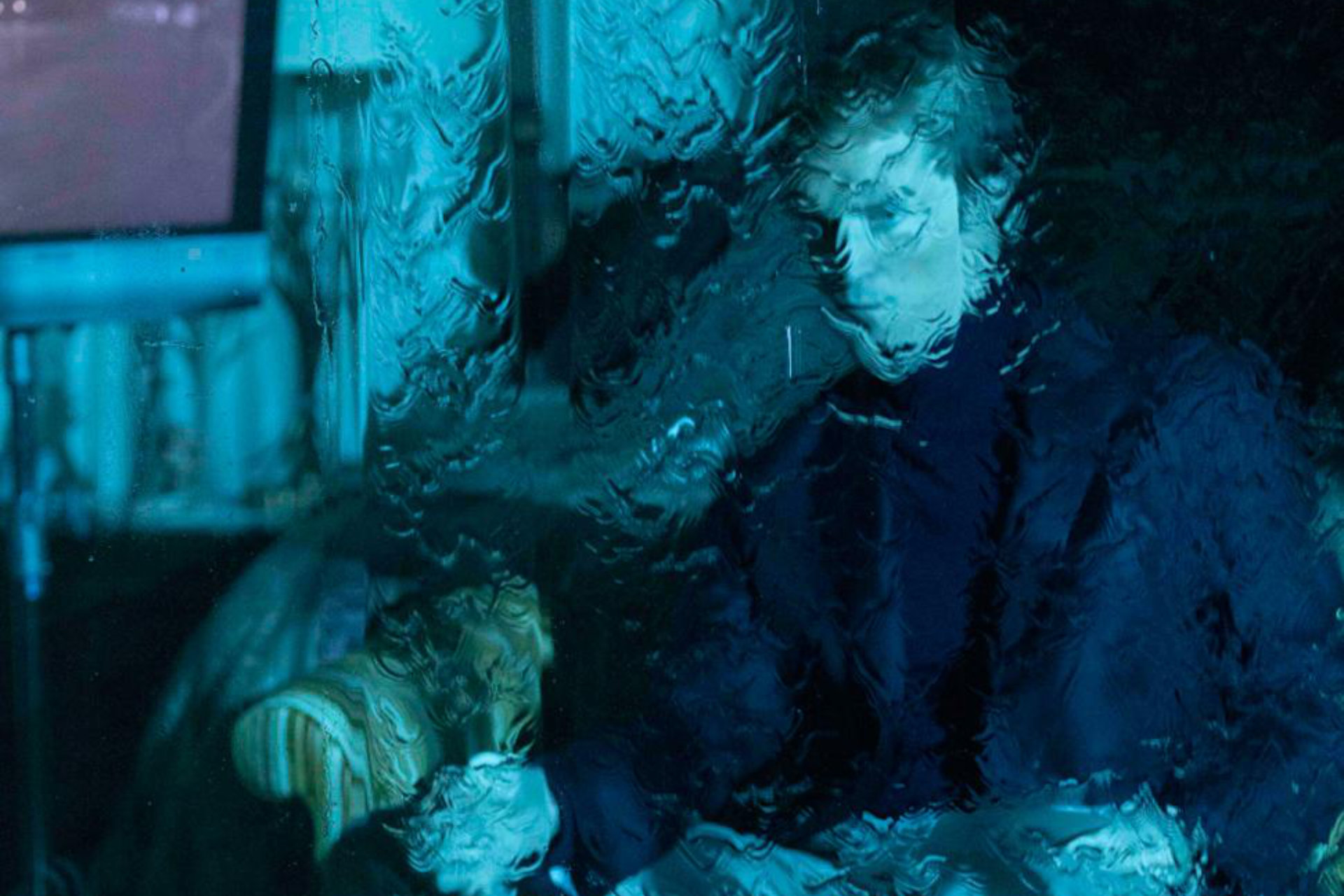
Hanson, played here by a stellar Robert Pattinson, appears to us from the top of a showcase staircase inside a bait house, emerging to “save” his decoy (Phoebe Bridgers, the only person with an immovable moral compass) from one of the predators lured to a bait house inside of some anonymous suburb. He is The Adult In The Room, less a man than a symbol, the security of 20th-century masculine stability illuminating the darkness of the digital age. Behind that image is an entire crew, from his producer (Merritt Weaver), fending off poaching attempts by other networks, to the founder of Perverted Justice (Matthew Maher), who sees his task as a kind of chess match with those he chats with online. They’re on to something special with this format, but Hansen won’t be content until he’s got the status he deserves — no Stone Phillips A-stories to contend with, just the glory of fighting for ratings supremacy with Lost. Just as the show gets its full greenlight (given to Pattinson and Weaver by Jeff Zucker, playing himself) and enters production on a full season of hour-long and episodes, Hansen gets word that the National Enquirer has some compromising photos of him with his mistress and will be publishing a story soon. He’s not so worried about what it’ll do to his wife (Anna Faris) and children, but he’s terrified about how it’ll undermine him, that it’ll reveal to the world that he’s ultimately just a man. It’ll compromise everything.
This is the situation that young actor Dan Plumb (a fantastic Skyler Gisondo, playing a composite character) walks into as TCaP’s new decoy. He’s flown out to Florida shortly after he’s hired, wanting no more than his SAG card and a few more clips for his reel, only to be thrust into the center of things. His first day on the job, without almost any prep time or context, sees him sexually harassed by a man with a whipped cream fetish (played, no less, by Jonathan Lipnicki). Hansen intervenes before things get out of hand, but the experience very understandably eats at the young man. There’s only so much a producer-supplied Xan can do in the moment, and it can’t prevent the telltale tears from falling slowly down his cheeks. Seeing that he’s got a new talent in his roster, one without the other decoy’s ideals, Hansen puts on a charm offensive and brings the young man closer to his side. Their relationship is most reminiscent of a smooth-talking army recruiter trying to get a high school senior to enlist – he senses Dan’s childlike need for acknowledgment and praise, and sells him on it with his steely charisma. This bond will only grow stranger as Hansen’s mental state deteriorates and he begins using the young man as a substitute for his own sons. For all his self-righteousness and grandstanding, the host has seen some truly haunting shit in his time, and once his defenses start to fail him, those memories rush back.
Pattinson is, as usual, brilliant. He’s playing Hansen as a knight errant, whose poise and fearlessness give way to paranoia – best represented by the bulletproof vest he sports during the last third of the film – and desperation. When the head of Perverted Justice suggests they might have a big fish to catch out in Murphy, Texas, Hansen thinks about it for a while, fighting his producer’s risk-conscious impulses. They need to be Must-See TV to earn their timeslot and get Zucker off their backs, and a white whale is just what his production needs – an enemy with power, someone who ensures that the show matters more than being the public shaming of a parade of losers. That catch is Bill Conradt (Alex Winter), the town’s district attorney, who is smarter than the average predator caught in their AIM dragnet and is actively battling his worst impulses, though the crew knows nothing of that.
One by one, their self-imposed rules fall by the wayside as they prepare to expose Conradt, a path encouraged by the town’s sheriff (Bokeem Woodbine), who hopes “Predator” will boost his re-election campaign. Yet Hansen is losing his marbles; the producer is taking calls from ABC, and the guy just won’t come out to the bait house and act like every other man caught in their sights. Of course this means disaster is coming; of course the rhetoric is growing supercharged – Hansen drifts into outright absolutes when persuading Dan to go through with his bait operation – by the minute; and eventually, an NBC crew finds themselves co-leading a raid on the DA’s house. What happens next will make television history.
Oppenheim, best known for long-form television documentaries such as Ren Faire and making his narrative feature debut with Primetime, is less interested in the audience’s culpability in this circumstance than David Osit was in his brilliant documentary Predators. There’s become something of a cliché among writers to compare the two as if there weren’t enough room or time for both Oppenheim and Osit to make complementary works in entirely different cinematic formats. But, rest assured, this isn’t The Smashing Machine, where the fictionalized counterpoint essentially recreates scenes from the documentary — it’s a highly stylized descent into the darkest recesses of pre-recession second-term Bush America that tries to place us inside the control room, asking us if we’re not entertained, but rather if we could be sweet-talked into following a guy like Hansen wherever he’d take us.
His prodding around the notion of “following orders” sees him emulate the surveillance style so creepily rendered in Jonathan Glazer’s The Zone of Interest, which is nearly as unnerving to watch as it is used here. When not immersed in digital grain from concealed vantage points, cinematographer David Bolen’s textures and colors resemble the depth and vividness of ‘00s media, with a saturated warmth that bleeds through the frame and reminds us of a time before everything turned tungsten or dark blue. This touch is more surreal than most of the outright surrealist imagery that Oppenheim inserts – everything feels cinematic, yet with our memories of the show going up against it, it feels fully false, emblematic of Hansen’s world.
This is a key difference between the works that I don’t think has been fully acknowledged: Osit wants to chart the program’s origins, document its continuing influence, and explore the impulses that made it viable as “entertainment.” Oppenheim, on the other hand, uses Primetime to indict its historical moment, recasting the mid-aughts as a time not dissimilar to our own, with the perspective granted to him by temporal distance. As things get worse in the present, we look to that era with more fondness than it’s worth, as the bubbles hadn’t burst yet and, depending on where you were, life was pretty decent. This goes doubly so for Gen Z, who remember those years with nostalgia, as secure and safe, rather than the awful moments that they were. The touchstones surround the characters – Gizlondo even stops at a Subway, where cardboard standees of Jared Fogle encourage him to “Eat Fresh” – and only amplify as they descend into the abyss, realizing the magnitude of the quagmire they’re immersed in.
This, frankly, is why I don’t mind the wholly unsubtle touches here, such as a scene in which Pattinson has a panic attack after being berated by one of the predators, asking him who he is to stand in judgment of someone he doesn’t even know. It is period-appropriate. This was a Two-Minute Hate, with all the obvious fire and fury that came with it, back in the last era when you could have a broadcast audience unified, ready to talk about those weirdos when they hit the water cooler the next morning. To paraphrase a now-famous aphorism, the cruelty of most ‘00s media was the point: a control mechanism to police abnormal behavior, provide comfort to those who believed they had nothing to hide, and turn a tidy profit for media enterprises looking for the next big thing. Hansen was merely the staccato voice of his moment, and Primetime knows most of us would follow him if he offered the chance to “do good,” no matter where it led. Hell, we’d be on TV, fearless and right. Would anything else really matter?