
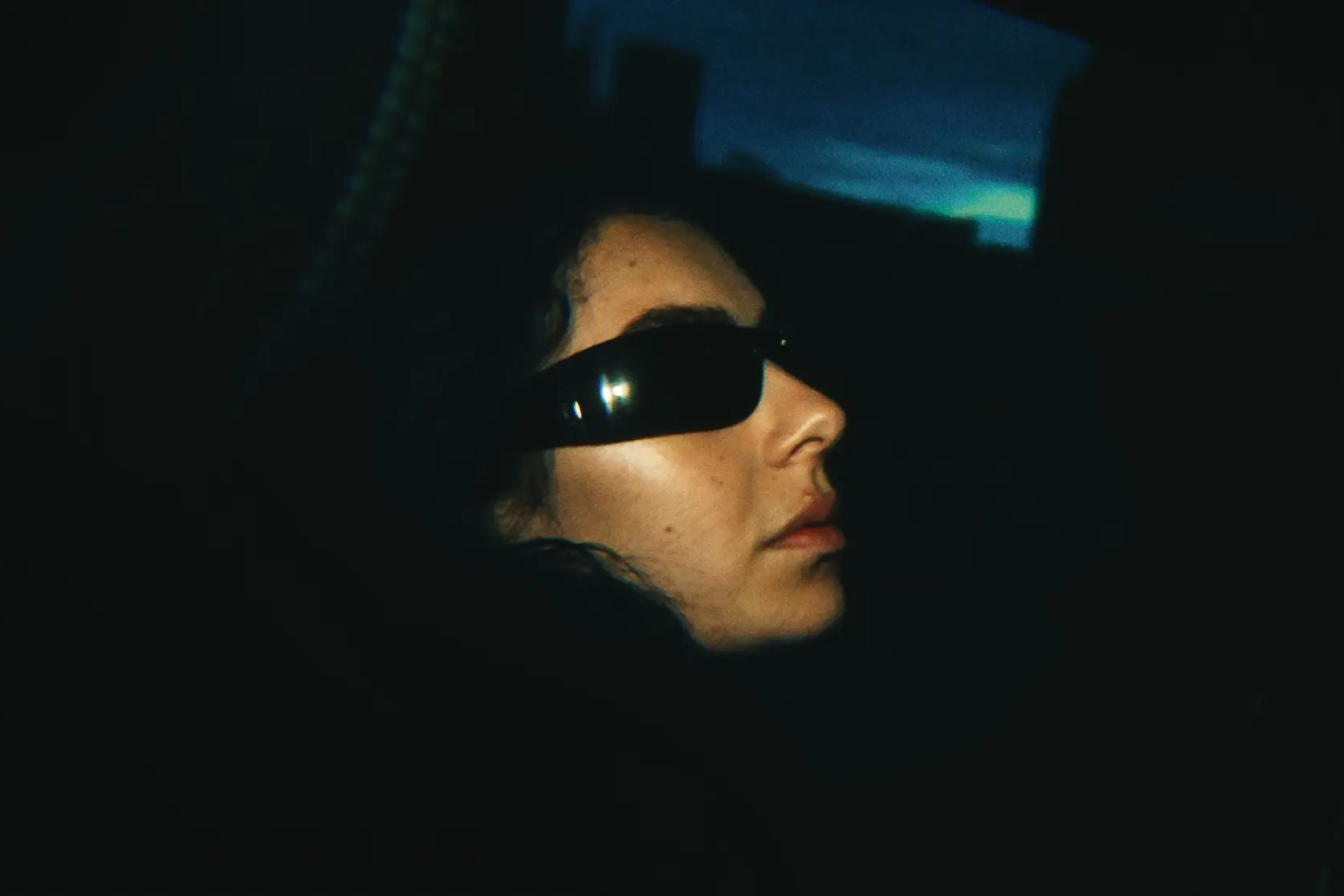
Protectionism is the name of the modern pop star’s game, even more so than making chart-toppers, but there’s a push-and-pull with the artist’s need to seem relatable and accessible to their would-be and established fans. It’s a paradoxical demand that rarely, if ever, works out in their favor, and there’s no better expression of this than in their choices when they decide that what they really want to do is act. You’re lucky if you’re a Beyoncé and find the balance between cool and comedy in something like Goldfinger or a Gaga going for broke in the fourth iteration of a Hollywood fable that no one expected to be as much of a banger as it was. It’s more likely that the truly careful megastar will avoid the spotlight — Harry Styles and Taylor Swift, for instance, spent much of their time in supporting roles — so they can escape notice should the movie turn out to be an absolute dog. Swift went from a bit part in a Garry Marshall holiday romance to a garish feature in Tom Hooper’s Cats to getting hit by a car in the opening minutes of David O. Russell’s Amsterdam; and Styles, at the very least, has attempted to push boundaries with his strange little filmography (being one of the loose threads soon to be cut from the MCU’s fraying cloth). Yet none are Charli XCX, and not one of their movies has been The Moment.
Directed by Aidan Zamiri, who’s worked with Charli* on several of her recent music videos and is Timothee Chalamet’s go-to publicity man, this is about as far as one can get from the kind of risk-averse perfunctory tour document that rakes in money hand over fist when an artist captures the zeitgeist. A more accurate title might have been Don’t Look Brat, as what it reflects is a genuine state of unease about megawattage fame on Charli’s part, much like Dylan’s evolution in D.A. Pennebaker’s iconic portrait. Unlike Swift or Styles, who started at the top (if having to share a bit more of the spotlight), Charli was comfortable working in the background – her first exposures to mainstream attention came from features and co-writing credits on massive Iggy Azalea and Icona Pop tracks, and she carefully cultivated relationships with performers all across the music world as a songwriter. This is probably the only time this comparison will be made in print: Like Kanye West’s days behind the mixers at Roc-A-Fella, she steered culture long before she made an impact as a solo artist. It makes a certain amount of sense that, like West, her elevation to the highest echelons of celebrity would be accompanied by a turn towards the big screen – West had his Runaway film and We Were Once A Fairytale, a sadly-forgotten collaboration with Spike Jonze, around the time of My Beautiful Dark Twisted Fantasy, and Charli has a host of acting work and The Moment for brat.
brat undoubtedly caused a lot of befuddlement to the Old Heads, who’d been listening to Charli since True Romance and were caught off guard when their parents started sending them text messages asking what “brat summer” was or, God forbid, their reactions to the record itself based solely on a Fox News segment about Kamala Harris co-opting it for branding purposes. Similarly astonished was Charli herself, in which The Moment finds its meaning. A “mockumentary” filmed alongside the actual brat tour, it’s mostly an exploration of the creative and financial tensions that accompany success, filmed in the anxiety-heavy language of the A24 catalogue. We follow her as she fights with her label over a credit-card promotion, goes on Colbert, does blow with Rachel Sennott in nightclub bathrooms, has fan meet-and-greets, prepares for a massive London show, and attempts to moderate a feud emerging between her tour director (Hailey Benton Gates) and an overbearing moron (Alexander Skarsgard) responsible for directing a Prime Video exclusive concert film. Almost overnight, she’s found herself as an asset, ready to be sliced up and served to hungry consumers by buffoons who barely understand what it is they’re trying to sell. Is it any wonder that, when given a chance to head to Ibiza for a weekend, she’d break professional decorum and bail out on rehearsals for a chance to get away?
That vacation is when everything goes miserably wrong and where The Moment ditches any resemblance to the actual events. In a moment of weakness following a bizarre encounter with a highly touted spiritualist aesthetician (Arielle Dombasle) and a chance meeting with Kylie Jenner, she cedes control to the worst forces in her working life without even really thinking. Skarsgard takes over the entire tour, transforming it into the Bezos-approved version of brat (complete with “nicer” shade of green and a new font), and Charli’s attempt to promote the brat Credit Card causes a bizarre (and quite amusing) financial crisis which mirrors what happened when Goldman Sachs started approving everyone with a pulse for an Apple Card, taken to its worst extreme. It’s essentially a jokey farewell to this era of Charli’s career, mirroring how the end of “brat summer” gave way to the winter of our modern discontent, ending appropriately with a remix of “I Love It” to carry you out of the theater. There’s another Pennebaker film in the DNA here, Ziggy Stardust, in that it captures a kind of “retirement,” with Bowie’s hanging up glam mirroring Charli taming “brat” so that forces outside of the zeitgeist can’t exploit it well past the sell date.
I’m not going to argue with people who think The Moment is self-indulgent or poorly-structured or whatever, because I think those ingredients are kind of integral to what Zamari and Charli are trying to do. The very fact that this is the film that emerged from “brat summer” is interesting enough on its own to merit some amount of consideration – it’s a reflection on an artist’s luck as much as it is a sympathetic indictment of her peers, many of whom have fallen into the same sorts of traps without even realizing that they weren’t in control anymore. That’s why the second half works so well: when the normal pop-star anhedonia fades into self-parody, her Roger Waters martyrdom is transformed into a Life of Brian that somehow feels more intensely human than its serious counterparts. Zamari’s solid enough behind the camera, with it feeling properly realistic (if a bit too heavy on the Noe-style strobes), and Charli herself is an interesting cinematic presence, an inaugural leading role in a year that will see her work with Gregg Araki, Cathy Yan, Romain Gavras, Pete Ohs, and Daniel Goldhaber. She’s willing to commit to a role to the point of potential embarrassment, as well-glimpsed in the way that she plays up her diva-ness to set up the fall.
It’ll be interesting how it plays with her fan base, especially as sorted by age. To recent converts, this might leave a five-finger impression on the side of their faces (complete with divots for each of her rings), as The Moment isn’t really about playing to a stadium crowd. It’s not The Eras Tour, after all, which is what Skarsgard (in a truly hilarious performance) so desperately wants it to be. That’s the kind of nakedly cynical branding enterprise that we expect from pop superstars and, as such, we don’t feel we’ve been cheated. Those films are what they say on their tins, regardless of whether they’re anything other than greatest-hits compilations performed politely and perfunctorily, just as they were when they were recorded in the studio.
Viewed at its worst, The Moment can be seen as its inverse – a collection of high-art adjacent status symbols signifying Charli’s proximity to the trendiest aspects of modern entertainment – only if one ignores the fact that it openly mocks that entire idea. I think the Old Heads will appreciate it as another color change from a chameleonic artist who’s ready to move on from green, but who can’t help but act like the CIA bosses at the end of Burn After Reading before she strikes out in another equally-brave direction.** Whatever The Moment is, I think we (and Charli) will only really understand it by the time that next zeitgeist summer comes around,
* It’s pretty weird saying “XCX,” so I’m going to break convention and just use her first name.
** “What did we learn, Palmer?” “I don’t know, sir.” “I don’t fucking know either.”