
Editor’s Note: The Independent Film Festival Boston, or IFFBoston for those with things to do, has just wrapped up its 2026 program, with a flurry of films shown at the Brattle, Somerville and Coolidge Corner theatres. Vanyaland film editor Nick Johnston caught the best of the best as they hit the screen, and we’ll be relaying his reviews all week long. Check out all our coverage, including past editions, and revisit his two-part 2026 preview here and here.
The “cynical, troubled realist encounters the supernatural and is changed” plot is kind of old hat at this point, but Damian McCarthy doesn’t really go for cliché. Any time Hokum, his latest feature, starts to tailspin into formulaic territory, he’s able to pull out of the dive and return to a comfortable (if intentionally turbulence-filled) cruising altitude. How? It’s in the way he seamlessly crosses genres, in how he takes what would be an Irish Shining riff and makes it an engaging crime thriller, a solid backwoods comedy, and a solid character study, handsomely rendered by Adam Scott, who rarely eats this good on the big screen.
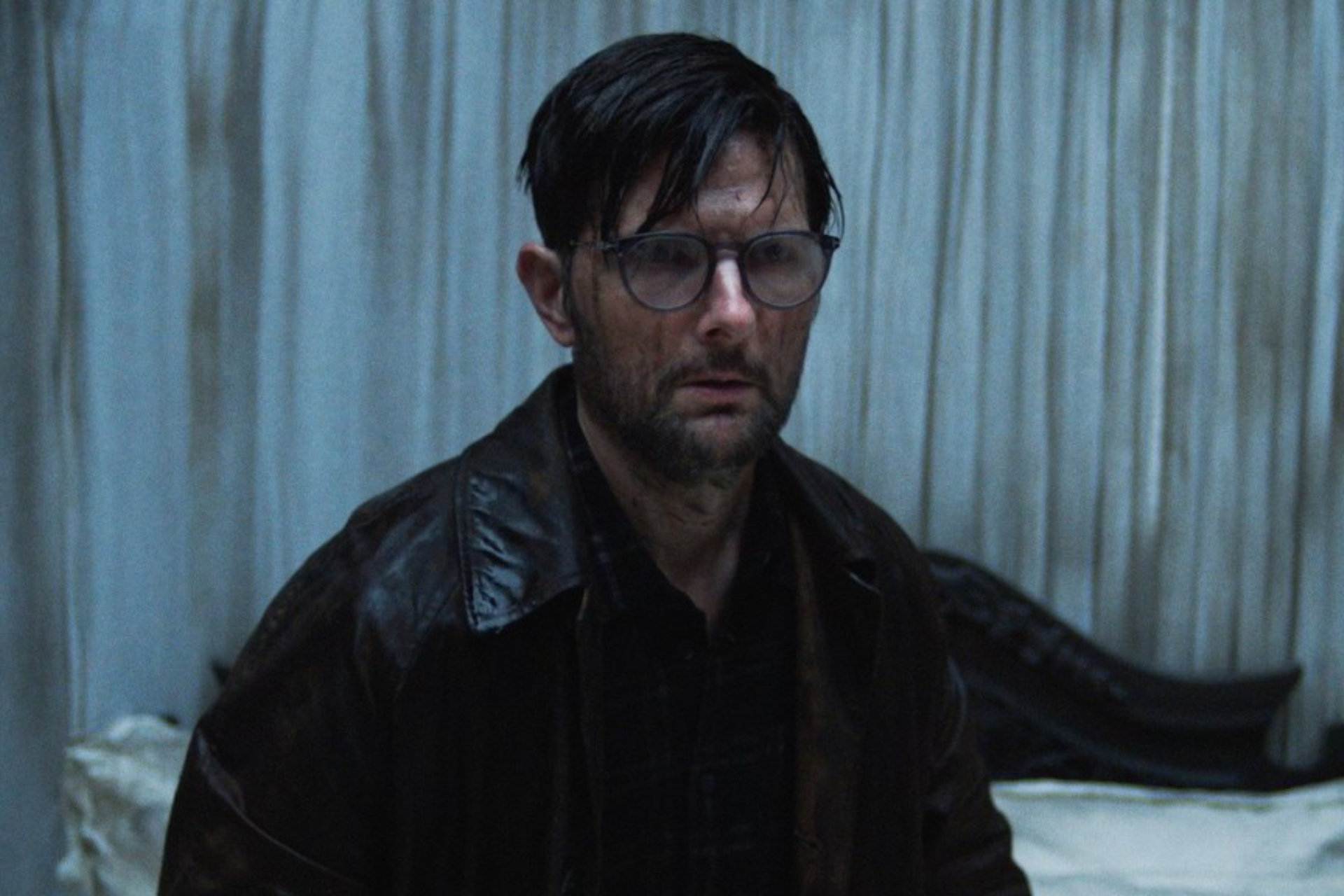
Scott plays the improbably-named Ohm Bauman, an American novelist with a penchant for rye whiskey and unhappy endings. As he draws his latest work to a close – the finale of a trilogy about a conquistador and a child trapped in the desert, searching for some mystical gold – he’s struck by the notion that there’s a presence in his house. That something draws his attention to his parents’ ashes, kept near a small case containing a pistol and a photo of his mother. On the back of that picture is an address in the middle of the Irish countryside, leading to a small country hotel where, once upon a time, before (as he believes) Ohm came along to ruin everything, his parents had the happiest days of their lives. She looks radiant in that moment, befitting someone on their honeymoon, with their whole lives in front of them. So, on a whim, he decides to spread their ashes in that forest and books a room at the hotel.
Ohm’s not too much of a people person, being much more content behind a keyboard, where the only fools he suffers are the ones he creates and leads to terrible ends. To be blunter: he’s an asshole, being downright cruel to some members of the staff, especially a poor bellhop who’s nursing his own ambitions to be a writer. The near-sociopathic groundskeeper hates his guts almost immediately for having the gall to question whether or not he needs to kill the goats that somehow wander up on patrons’ cars (don’t ask), and the slick receptionist is a stuffed shirt that he can see right through. In fact, the only person he seems to like in the whole place is the bartender, Fiona (Florence Ordesh), who does her best to humor him, sensing that something’s off. Same with the local psychilobin-laced hermit, Jerry (David Wilmot), who offers him a stiff drink and conversation near the tree from the photo.
It’d be hard not to miss the sadness. See, Ohm’s nursing a deep and enduring pain from childhood, still so fresh it makes him want to join his parents. So, after hearing one too many tall tales about how the hotel’s honeymoon suite has been sealed off and up because the owner trapped a witch in there, he decides to book a one-way ticket to the afterlife. Were it not for Fiona, he’d have ended up there, but instead, our author wakes up with a rope burn on his neck, the scent of hospital cleaning fluid in the air. A few weeks later, he heads back to the hotel to get his things, only to discover that Fiona’s gone missing and that Jerry’s the lead suspect. Ohm’s sensitive enough to know that this is some bullshit, and he and the hermit team up to try and find her – leading them, of course, right to the honeymoon suite and whatever fresh hells await them behind those doors.
This is a role tailor-made to Scott’s strengths as a brutal, sarcastic wit, with the supernatural circumstances and cheery cast making him stand out like a sore weed in a field of four-leafed clovers. He’s been a superlative heel throughout his career despite transitioning to leading-man roles over time, and it’s nice to see him on-screen in a role that complements both skill sets. Keeping a character as abrasive as Ohm — one who, say, burns a bellhop’s hand in one scene for daring to ask him to read his manuscript while he’s sucking down another double – on the road to redemption without losing the audience is a difficult task, and McCarthy and Scott pull it off. Weirdly, it’s in keeping with his arc for him to be spared, an act of writerly kindness that is ultimately reflected in the revised finale of his novel. It’s impressive stuff when drawn out to the fully metatextual level that McCarthy seems to imply here: perhaps our cosmic author will spare him or Scott some measure of pain in the coming years, though I hope they’re starting from a better place than Ohm, all things considered.
Hokum is decently scary, but it’s less a Tower of Terror drop and more a compelling yarn, complemented by some genuinely frightening setpieces and Lewton Bus screeches. The paranormal aspects are handled surprisingly lightly – we don’t get an extensive explanation of the “witch” or her powers beyond some idle chatter, and she’s only briefly glimpsed in comparison to some of the other monsters in a similarly-budgeted weight class. The story’s the primary attraction here, executed with a clever blend of humor, pathos, and, yes, frights that defies the “elevated” horror tropes. At no point does it feel like an aesthetic amuse-bouche for an entrée that never leaves the kitchen: It’s a well-designed machine both in structure and in visuals (the honeymoon suite is creepy without being overwhelmingly so), with characters clever enough to figure their ways out of the traps laid for them by magic or by vengeful hotel employees.
It’s all just so damn satisfying – hell, there’s a scene involving a butter knife that might be one of the most suspenseful of the year so far. And, like a butter knife, you’d be surprised at just how sharp this thing can be.