
Editor’s Note: Vanyaland Film Editor Nick Johnston is back from Utah from the 2026 Sundance Film Festival’s grand finale out in Park City. He’s still very busy, with more reviews coming this week. Check out our preview of the 2026 festival; keep it locked to our full coverage of Sundance reviews from this year’s festival as they go live, and check out our full archives of past editions.
Why is it that film critics seem to hate movies about the art world? I don’t mean hagiographic portraits of famous artists or over-glorified A&E Biography docs about similar subjects — those rarely need help generating a positive consensus on the aggregators. The movies I’m talking about specifically relate to the business of the modern art trade, where the batting average is less-than-stellar. Art School Confidential landed with a thud; Velvet Buzzsaw was universally reviled back when it premiered at Sundance 2019; Nia DaCosta’s Candyman quickly fell out of favor after months of hype and two weeks of puffery; and now Cathy Yan’s The Gallerist seems to be headed for the same fate. This is a bummer — it’s a funny, deeply personal work about artistic compromise and the dirtiness of the whole charade — but also somewhat revealing as to why these films are so disliked: the art world is an ersatz mirror of the film business, without the sentimental notions governing its portrayals from Hollywood and the studio-adjacent.
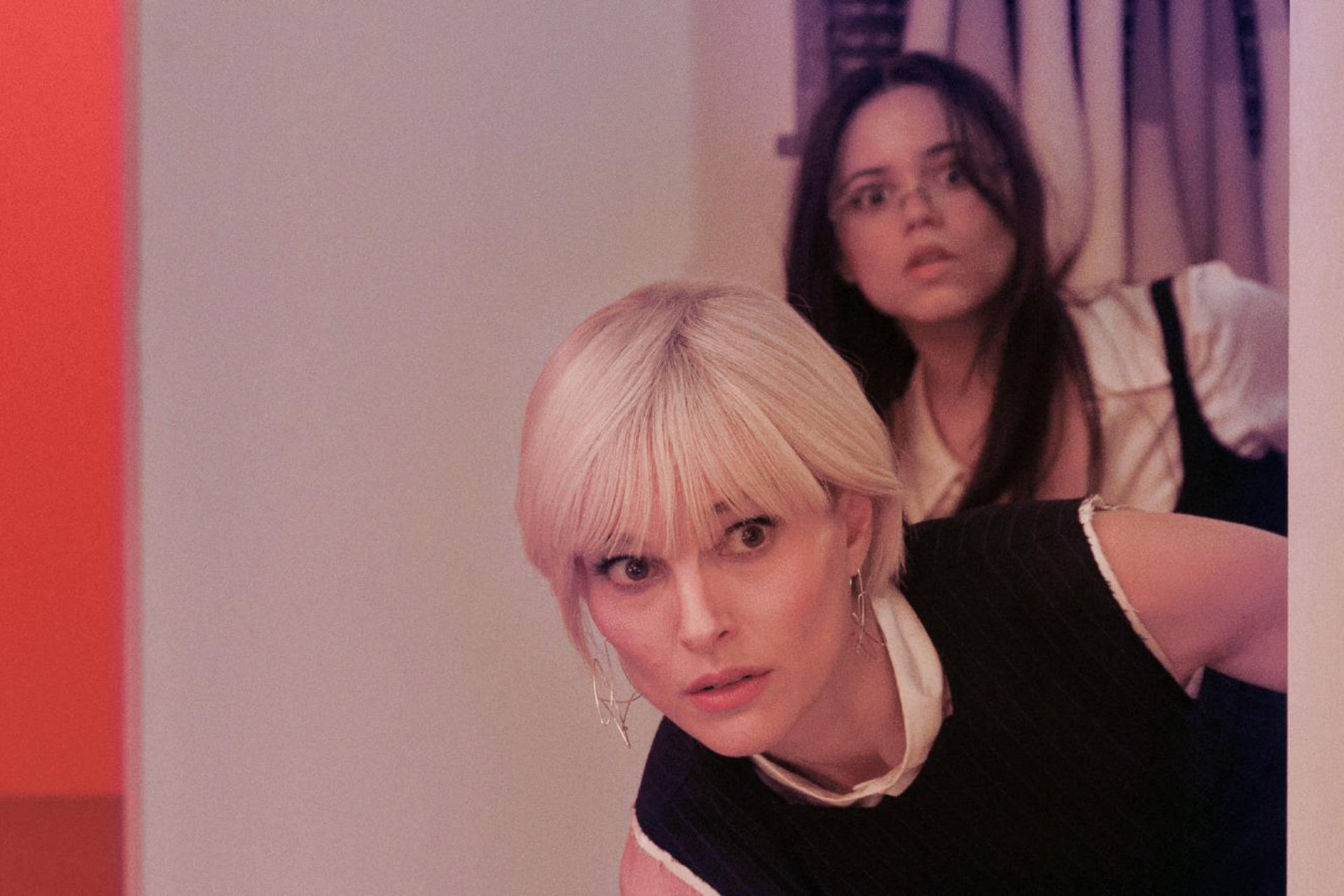
The Gallerist takes place during Art Basel, when rich people from around the world come together to spend way too much money on aesthetic luxuries that’ll ultimately be left to accumulate value in a Free Port container or on some yacht docked in Ibiza. It’s also where smaller galleries try to make a name for themselves and the artists they represent, and this particular year is make-or-break for Polina Polinski (Natalie Portman), who went from selecting works for her ex-husband (Sterling K. Brown) and his private collection to leading her own exhibition space, thanks to her divorce settlement. It hasn’t gone particularly well: she picked a poor location (a renovated gas station, with signage still visible under the new coats of paint), made some enemies, and hasn’t worked with the buzziest artists. In short, she and all those in her orbit — her assistant (Jenna Ortega) and the artist (Da’Vine Joy Randolph) behind the latest solo exhibition — are totally fucked if this opening doesn’t go exactly as planned. No, it needs to go better than planned.
They say it’s always darkest before the dawn, and that 4 a.m. pitch-black moment comes when Polina invites a dickish art influencer (Zach Galifianakis) in for a private viewing shortly before opening the exhibition’s doors to the public. He’s particularly attracted to a giant statue of a burdizzo — a tool used by the artist’s father to castrate bulls, with one handle’s end rendered as a giant, sharp point, jutting outward — which just so happens to be next to a slowly-accumulating puddle of discharge from the broken AC (Polina doesn’t like the look of cones and caution signs on her big day). They get into an argument, the influencer slips, and he impales himself on the pointy end. This, of course, cannot happen, and there’s no time to move the body, so Polina does what any self-enterprising gallerist would and… arranges it for display as a part of the piece. Amazingly, the charade works, and none of the spectators realizes it’s an actual, freshly-deceased corpse. Unexpectedly, it becomes a viral sensation, attracting attention from the art world’s biggest broker (Catherine Zeta-Jones), a bro-y scion (Daniel Brühl), Polina’s ex, and the influencer’s girlfriend (Charli XCX). What follows is Polina’s attempt to sell the piece before it starts to stink, while she deals with the fallout as the people close to her get clued in to what’s going on.
Yan’s filmmaking is as strong as ever, merging her keen eye and sense for dramatic production design with graceful Altman-esque camera movements (The Player must have been a big influence) and casting. The ensemble is uniformly fun and engaged, with particularly good work from Zeta-Jones, Ortega, and Randolph. Zeta-Jones’ character is on the warpath, looking to redeem herself after a stint in federal prison with a big sale, and is appropriately sardonic and droll, with occasional lapses into deeper feelings of pain. Her relationship with Ortega, here her on-screen niece, is funny given the contrast between their characters, and Ortega’s nervy disposition — she is always three heaves away from puking when reminded of the rotting corpse only a few feet away — is a great source of comedy, well-played in her hands. The rest are good, with Portman holding the film together with a sense of frantic urgency and pathological girlboss attitude, but it’s in Randolph’s character that I think the film’s nature reveals itself.
As mentioned, Randolph plays the artist, who spent years crafting a deeply personal oeuvre about her childhood with her ranch-hand father, had no expectations of success, and is initially enraged by two things. First, she’s pissed that Polina would mess with her work and put a “dummy” corpse on top of a pivotal part of the exhibition (though she quickly realizes what actually happened and becomes part of the plot to sell the work, body and all), and second, she’s angry that Polina didn’t stand up for her vigorously enough when she overheard the influencer denigrate her work — and her status as a woman of color in the art world. Given the film’s conclusion, in which everyone gets their just (or, more accurately, unjust) desserts and Randolph is left lamenting that she’ll be known as “the corpse lady” for the rest of her career, the parallels to Yan’s career in filmmaking feel rather apt. She started out making shorts and eventually a feature, Dead Pigs, that explored tensions between cultural identities, before getting drafted by DC and WB for Birds of Prey.
The compromises she makes, the money-oriented morons she’s interacting with, and the eventual substitution of her hard-won identity with flash-and-bang sensationalism — all of it feels as if it were the film business simply transposed into the art world, where a big sale at Art Basel is essentially a direct echo of opening weekend box office receipts, the art is secondary to its status as a coveted object, and to which there’s no guarantee that it will ever be seen by the public (a fear understandable in its analogue to WB’s post-merger shelving of films like Batgirl, whose production Yan was no doubt close to).
This sense of bitterness and self-criticism — misattributed to attempts at overt parody of modern art by other writers — is what separates The Gallerist from its peers. It’s especially true for Velvet Buzzsaw, which I enjoyed for its Paul Bartel-like sensibility and humor, but can’t really compare to the depth Yan brings to this project as a multi-layered satire. When interpreted as a metaphor, it makes sense why the film ends how it does, and how the extraordinary circumstances of its inciting incident don’t prevent it from being just another day at the gallery or at the cinema. It’s all there in the thesis, which Yan handily provides for us in the form of an epigraph from Andy Warhol (which might actually be from Marshall McLuhan, which makes it all the funnier): “Art is anything you can get away with.”
It’s true, no matter if you’re trying to sell Zach Galifianakis’ corpse to the money men or trying to slot in some of your real identity in the context of the DC Extended Universe. If other people’s money is involved, you’re bound to their whims, and the best you can hope for is that you sneak it past the buyer and that someone might recognize it for what you originally intended before the slip-and-fall.