
Editor’s Note: Vanyaland Film Editor Nick Johnston back on the ground in Utah covering the 2026 Sundance Film Festival for the grand finale out in Park City. He’s already very busy. Check out our preview of the 2026 festival; keep it locked to our full coverage of Sundance reviews from this year’s festival as they go live, and check out our full archives of past editions.
High-concept neo-noirs are a beautiful, beautiful thing, and we should always be grateful when one as good as Daniel Roher’s Tuner hits the festival scene. A pithy synopsis might hit you the wrong way, much as it did for me when I heard about it back at TIFF – “Really? Is this just The Lookout with hearing aids instead of memory loss?” – but thank God for Sundance’s Spotlight section, which picks up unreleased titles from other fests and lets you know that, no, your friends weren’t kidding you when they told you how much they liked this. Grounded by a solid performance from Leo Woodall, it’s a heartfelt, very funny little crime drama about dead dreams, earplugs (not “aids,” as I had thought), and what happens when one’s personal burden becomes a treasured asset for some ethically-compromised security men. Oh! And it’s also about why you shouldn’t hire Billy Joel for your fundraiser, lest your mansion be robbed while he’s tickling the ivories.
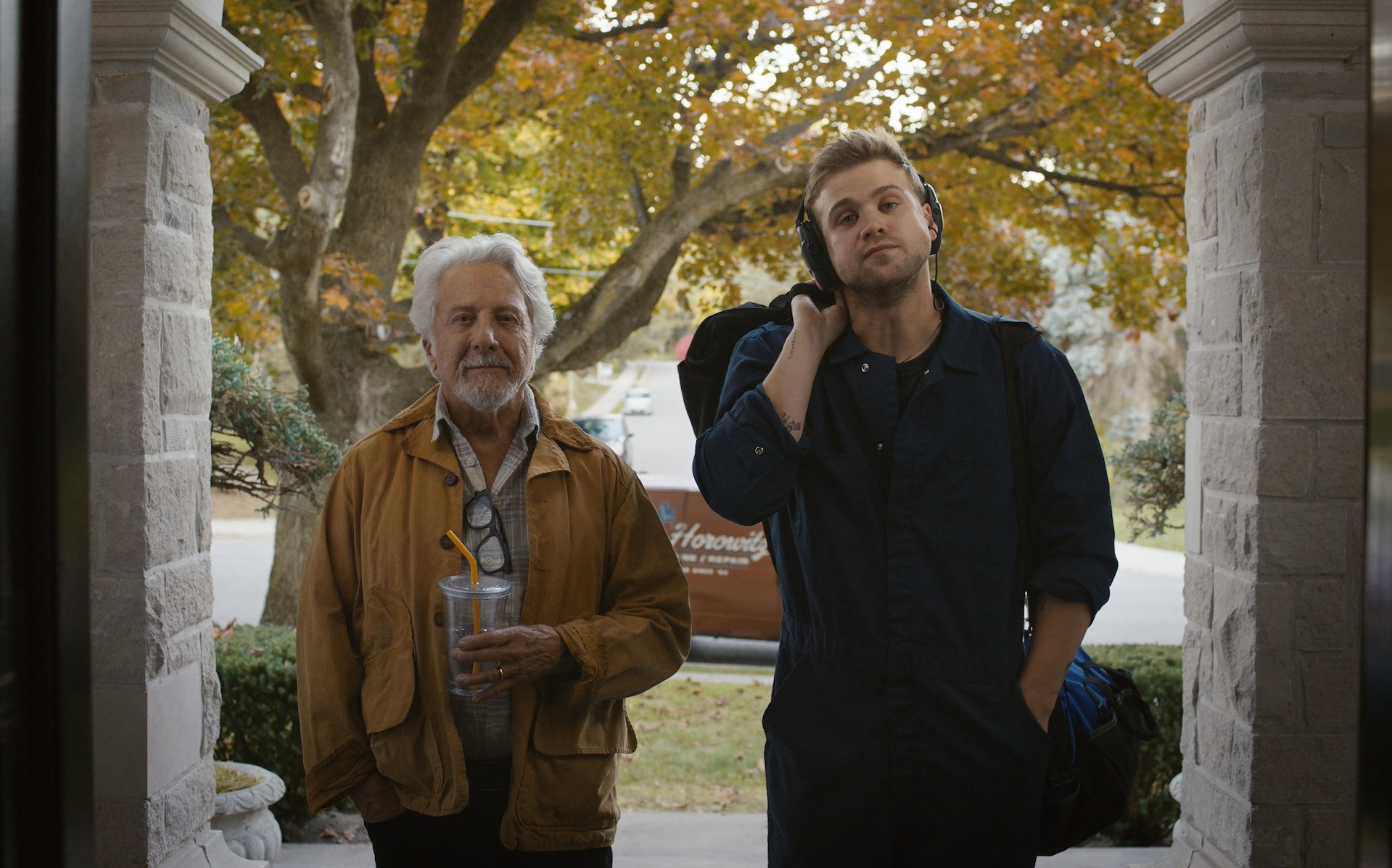
That’s how Niki (Woodall) falls into this racket in the first place – tuning. He’s helped his buddy Harry (Dustin Hoffman) run his piano-tuning business, which is falling apart from a combination of the old man’s good intentions (his wife points out he hasn’t raised his prices in thirty years) and advancing age. They’re bonded at the hip, with Harry acting as a surrogate father to the younger man, given that Harry was, in fact, Niki’s father’s best friend. Things haven’t gone great for Niki, who was once a piano prodigy on the level of a Mozart before he developed what he describes as an “allergy to noise.” Essentially, he has super-hearing. The normal sounds of everyday life are enough to cause him significant discomfort – if he’s not wearing earplugs, he’s got on a thick pair of soundproofed headphones, which are a necessity in a city like New York – and it took him years of intense therapy to stand the sound of a single note without any protection. His relationship with Harry, full of irascible banter, is pretty much the only thing keeping him going, and he tries to help him in whatever way he can. So, when Harry accidentally locks his hearing aids inside his bedroom-closet safe, Niki takes the safe home to see what he can do to open it.
Turns out, with a little bit of learning and skill, his sensitivity to sound is exactly the tool he needs to become an expert safe-cracker. It’s something that initially just amuses Niki, a funny story to tell Harry, but when the old man suffers a bad fall and racks up a massive hospital bill, he gets an opportunity to put his skills to the test. One night, when he’s asked to come back to a client’s huge mansion after the landscapers have left so that he can tune the instrument in peace and quiet (can’t leave Billy Joel waiting!), he discovers the homeowner’s security team drilling into the safe. Instead of running away, he complains, and, when confronted by the thieves, offers to crack the safe for them just so he can get back to work. They’re amazed when he can do it, and the ringleader, Uri (Lior Raz), offers him the chance to make some extra money pulling similar heists. Knowing Harry’s thousands and thousands of dollars in the hole, he reluctantly calls the man up and falls into the racket. Meanwhile, he’s slowly falling for a music student (Havana Rose Liu), who seems to have everything that he ever wanted out of life before it was ripped away from him – and it doesn’t seem to bother him, initially. But when the pressure starts to mount, and his conflicts with the gang multiply, he runs the risk of alienating and endangering every single person he knows and loves unless he can find some way to get out of the business. Hopefully with all of his fingers. You never know, he might want to play piano again someday.
Roher’s best known for his film Navalny, and this is indeed his narrative feature debut. What an astonishingly well-done transition it has been on his part. The cast is expertly assembled, with the lead performers – Woodall, Hoffman, Liu, and Raz – each delivering fantastic turns. I’ve seen some complaints about Woodall being, well, wooden, but I think his aloofness is a well-rendered choice: he’s playing a character who has been thoroughly humbled throughout his life, and who is cognizant that his disability makes him odd to others. The fact that his relationship with Harry – affably played by Hoffman, who cranks up the charm to degrees unseen since the ‘80s – endured has kept him somewhat grounded, and one could effortlessly imagine Niki’s rage-and-pain-filled existence without him. They verbally spar and roast one another, but they’re there for each other at the end of the day. The same applies to his budding romance with Liu, in which he juggles a series of complex emotions – passion, compassion, envy – with the subtlety required to portray a man whose own heartbeat can cause him aural discomfort.
What makes Tuner much smarter than the average mid-budget thriller is its screenplay, co-written by Roher and Robert Ramsey, full of wit, feeling, and expectation-defying verve. A particularly good example of this is Raz’s standout scene, in which he convinces Niki to crack his first safe as a member of their crew. He weaves him a yarn about how evil this fat cat is, how he steals money from the poor and sick, uses it to buy cars he won’t drive and watches he won’t ever wear, and that they have a karmic right to take all of the things that he’s, in effect, stolen from those around him. One of his co-horts asks him in his native language something akin to “What are you talking about? This guy owns a (insert innocuous business here),” and Raz tells him to shut up before finally leaning on Niki in his closing appeal. It’s an expertly crafted tension break that tells us something about each of these characters, no matter how minor, and these details play an important role in how things unfold. There’s not much useless information here, and it’s to Tuner’s credit that it makes the most of its high-concept logline and turns it into a compelling, fulfilling work of narrative storytelling.