
Editor’s Note: Vanyaland film editor Nick Johnston has left the country, posting up this week in the Great White North to cover the 51st Toronto International Film Festival. As usual, and perhaps now more than ever, we wish we were up there with him! Check out our continuing 2026 coverage, get rolling with our official curtain-raiser, and revisit the complete Vanyaland coverage archives from past TIFF editions.
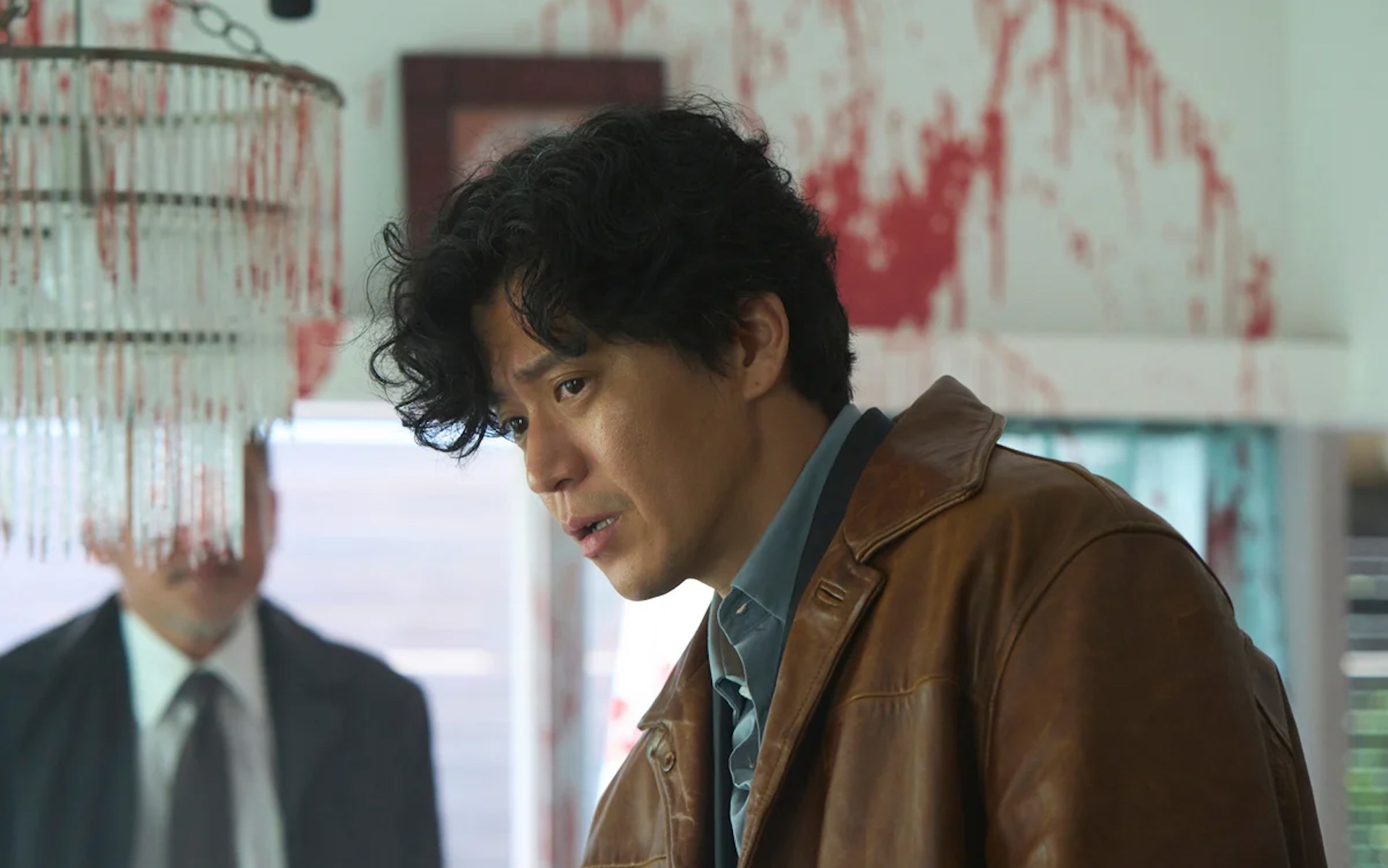
Chalk it up to cultural differences, but the bad lieutenant at the core of Takashi Miike’s Bad Lieutenant: Tokyo isn’t very, well, bad by the heavy standards of us Westerners. If you’re expecting either the bare-assed evil antics of Harvey Keitel or the drug-induced madness of Nicolas Cage, you’ll find both ready to watch any time you’d like on streaming or Blu-ray disc. If you’re going to Tokyo, you’ll be in the care of Detective Yabuki (Shun Oguri), a particularly Japanese kind of hedonist. He has some superficial resemblances to his predecessor – our dude Yabuki likes a bump, spending time in the company of Korean sex workers (occasionally getting some head, but mostly playing ping-pong), hustling his plug for money and the use of the man’s vintage car, and losing money gambling. Yeah, there’s no Uncut Gems-style victory at the end of the tunnel here – this man has luck so shitty that all of the maneki-neko (those lucky cats everybody thinks are Chinese) in the Gotoku-ji Temple wouldn’t help him win a -2000 bet on an NPB game. He’s the Shohei Ohtani of bad beats.
What he is, frankly, is amusing in his own weird little way, perpetually exhausted like a salaryman close to karoshi, or a stress-related death due to overwork. He’s barely home, and when he is for the only time in the feature, he finds out his wife has taken the kids and left for her family’s home. We never meet them. He was in deep with the Yakuza before the government cracked down on organized crime, and is still the go-to man to work on identifying any corpse with opulent tattoos. Yabuki will see a few of them before the credits roll, but the first is what puts him on the path to ruin. This soldier’s naked, with a broken neck, and his face scraped off. It’s a weird murder, and it only gets stranger. His main suspect, a recently paroled member of a cult-like Yakuza subculture, is apparently murdering his way through his enemies list, and turning the bodies into meatballs for the crows. But there’s another angle here, one that an FBI agent (Lily James) is willing to exploit to find her man – a politician’s daughter (Liv Morgan), built like a brick shithouse, who likes sampling fine sushi and the sexual stylings of Yakuza men.
If the Bad Lieutenants share one attribute beyond all of the obvious ones, it’s anticlimax, which practically defines the sensibilities of Ferrara and Herzog’s entries as far as their ethics are concerned. I have a strange feeling that this is responsible for Miike’s take getting savaged by critics at TIFF – it isn’t as brutal as the first, nor is it as acid-tinged and bizarre as the second, and it is thoroughly Japanese. It’s repressed in all of the right ways and bitterly weird, presenting us with a shattered protagonist without showing us the fall that broke him. His drug use is bad enough as it is when it comes to the cultural norms over there (just remember what happened when Paul McCartney tried to bring some hash through airport security), but it’s his nonchalance and coolness that keeps him at a remove as well. He’s not sardonic or sarcastic; he’s just seen too much and knows what he needs to get out of it. Oguri is fantastic, and does a really good job of illustrating what remains of his soul – there’s a funny and heartbreaking scene where one of the sex workers asks him to pretend to be her child’s father at a bring-your-parent-to-school day, and you realize that this guy could have been a decent parent, perhaps if he’d found another line of work.
His relationship with James is strange and strained, with her doing an unconvincing Rust Cohle impression complete with McConaughyisms and drawl, but she’s there simply to secure worldwide distribution and funding. But a Bad Lieutenant is less about the supporting cast and more about the setting and lead. Miike, in full First Love mode, understands Tokyo like few other modern directors able to cross over with a Western crowd, and his depiction of Shinjuku feels appropriately lived-in and accurate, if hyperbolic in the way the previous installments rendered their settings. There’s some solid action (if there’s a vintage car present and someone’s asking the lead not to damage it, you know that thing’s gonna get trashed), some amusing asides, and some stomach-churning gore, but the focus really just remains on Yabuki and his exhaustion as he tries to pull himself out of his gambling debts and find some method back to honor. It’s almost a foregone conclusion that he won’t, but it’s worth watching him try. The only question is whether or not this name – Bad Lieutenant: Tokyo – is a burden on an otherwise solid feature. I don’t think it is, but the Bad Lieutenant is really in the eye of the beholder anyway (and, that said, Port of Call New Orleans will never be beat). It’s all about your vantage.