
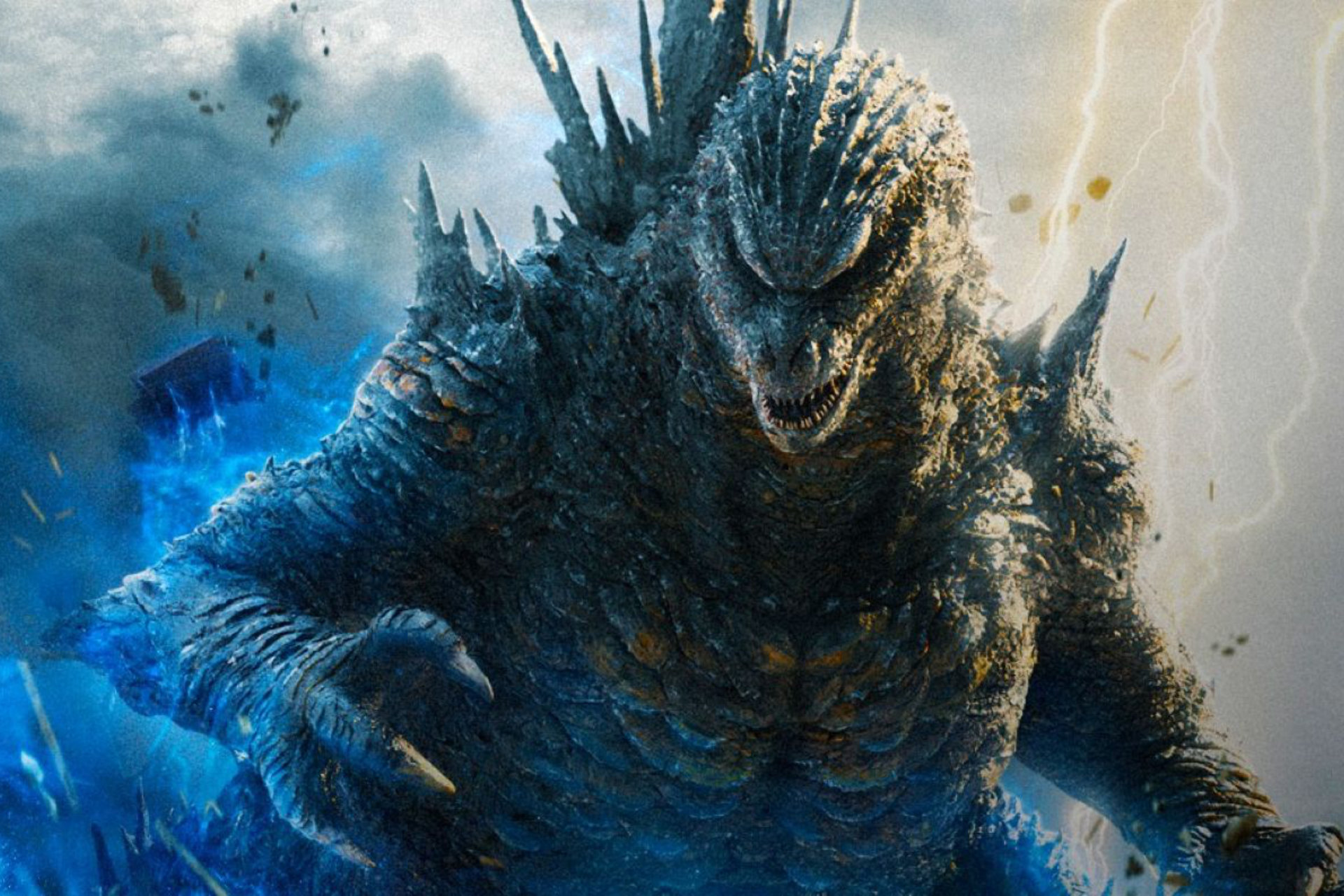
Forget the bright excess of the post-Gojira Showa era, or the modernist excess of the Heisei, or the American attempts to bridge the gap for a worldwide audience: Takashi Yamazaki wants you to remember that Godzilla, first and foremost, is serious business. He does so by literalizing a metaphor that Ishiro Honda himself went to his grave claiming he didn’t intend to make, somehow stripping the subtlety from what might be the most obvious response made to national trauma. “Hey, did you know Gojira is about post-Hiroshima atomic age fears of devastation?” Yes! It turns out that most Japanese viewers knew that, and, despite having Raymond Burr assure them that this monster with radiation-burned skin and who breathes atomic fire had absolutely nothing to do with the events of August 1945, some American viewers did, too! Twice now, he’s done so not by making a “serious” film – Hideaki Anno and Shinji Higuchi beat him to the punch with Shin Godzilla, a movie that actually pushed the series forward into new thematic (and genuinely terrifying) territory – but by making a “Japanese” one. When viewed as a supposed course correction from the MonsterVerse movies, a reclaiming of an aspect of the national identity from predatory foreigners, the praise lavished upon 2023’s Godzilla Minus One and its sequel, Godzilla Minus Zero, makes a certain amount of sense.
What’s funny is that, despite being “originalist,” the movies are better received in markets saturated by the MonsterVerse than at home. In critical surveys of Minus One, one can see that plenty of Japanese writers hate what the movie represents: A nationalist, nostalgic fable that erases the country’s painful past, much like Yamazaki’s other features. When Hayao Miyazaki takes you to task for adapting The Eternal Zero, perhaps centering your Godzilla film around failed Kamikaze pilots is less novel than it may seem to Western audiences and more a throughline that runs through your work. This is one reason I didn’t review Minus One when it came out: Aspects of its craft were undeniably fantastic, but I couldn’t put my finger on what made me so uncomfortable while watching it, and god forbid I go off half-cocked about a culture I only have so much experience with. I’ve never particularly liked the idea that Godzilla represents the spirits of fallen Japanese soldiers coming home to tear apart modern civilization, and I like it even less when it’s moved back to the immediate aftermath of the war. The guilt is misplaced. Were these the souls of those killed by the Imperial Forces given physical form, I’d empathize with that perspective and setting a bit more. I should also stress that this amnesiac whitewashing of history is by no means unique to the Japanese – Pocahontas exists, after all, as does The Patriot.
The problem, ultimately, is that it’s very, very difficult to make a sequel to a jeremiad about how your country was betrayed by its generals that doubles as a paean to the Japanese spirit in times of trouble without, you know, abandoning some of the edge that made the film feel unique. That’s especially true when you didn’t intend to make a follow-up. Thankfully for a Gaijin like myself, Godzilla Minus Zero is much easier to write about. That’s because it simply sucks as entertainment, though that’s not to say Japanese critics won’t tear this film a new asshole for how it mauls history. I’m just here to say that, as a movie, Minus Zero lacks almost everything that audiences loved about Minus One, and that includes Godzilla himself. Instead, we watch as our collection of well-worn archetypes substituting for “characters” stumble and bumble their way through a new threat and make it much worse, which Godzilla has to come in and clean up. Critics have been asked not to reveal too much about the new film, so I’ll do my best to try and honor that request. It’s not like the spoilers aren’t out there on the goddamn Wikipedia page, and you can probably guess exactly what the new threat is if you’re familiar with Godzilla lore, but I won’t spell it out.
I’ll give Yamazaki credit for this: In true Godzilla sequel fashion, he devotes so much time to the worst kind of melodrama instead of, God forbid, the monsters themselves. It’s nearly as bad as what Mike Doughty did in 2019’s King of the Monsters, though I honestly prefer that movie’s hyperactive stupidity to the dullness Yamazaki wants us to be captivated by. There’s so much dead air in this movie – silence, yes, literal silence – that each thunderous violin cue feels like a jump scare. Or, more accurately, an alarm clock disturbing a peaceful night’s sleep. Even when the monsters finally square up, or when Yamazaki tries his hardest to shock us with some sort of gory thumbing of the nose to Nolan, the movie is relentlessly dull. The stakes are low, with the fight taking place in the section of Tokyo already ruined in the first film, and the fight feels like a Mayweather title bout – if one of the creatures isn’t gassed, running, or in the clinch, what contact does happen would only delight a points-focused judge and make everybody else regret spending so much dough on a pay-per-view.
What’s really strange is how bland everything is compared to Minus One. The characters and setting are no longer novel, and Yamazaki seems paralyzed by the idea of letting them grow or face consequences: By the time one of them does, you want to cheer that something finally happened, that the film’s placidity was shattered for the briefest of moments. The actors are allowed to over-perform in pure B-movie fashion, and for a moment, the film approaches camp entertainment. That’s far from what Yamazaki intended (given how he treats each utterance as if it is worth a pregnant pause, this film is the height of drama), but there’s a certain amount of fun in watching Ryunosuke Kamiki look like his head’s going to explode. It’s a nice break from the near-constant stream of exposition or Hallmark theatrics, but from there, the movie once again nosedives into sentimental territory, ending on perhaps the funniest unintentional flex a character can do to the significantly less fortunate. There’s a lot of that type of cruelty here, if you’re willing to look for it.
There are a few effective bits – chiefly, the opening sequence, cribbed straight from Spielberg’s War of the Worlds, in which a few characters dodge atomic fire and a rampaging creature to try and capture Bolex footage of the new calamity, all done in what must have been an expensive tracking shot – as well as the same decent VFX work, though I hope that Hollywood acknowledges the return of puppetry to the cinema and gives the Oscar to Project Hail Mary or The Odyssey this year. It’s not even the best hypothetical nominee to come out of Asia this year – pretending it’s better than Hope in any way, shape, or form is especially silly, given that feature manages to stay engaging for a full two and a half hours. But Minus Zero isn’t worth sitting through all that exhausting melodrama to get to those mid monster moments, or to get mad about it. At least with Minus One, a viewer with some knowledge of history could feel angry about things – this was, in some interpretations, compelling right-wing agitprop – but I imagine it’ll just be met with indifference or just outright ignored by those in the West.
A final point: Godzilla disciples could rival Batman acolytes for their pathological need to be taken seriously. Part of the reason the character is so beloved is because of his goofiness, but I’d also argue that the first Godzilla is a more lauded piece of art (or, as Manny Farber would call it, “termite art”) than practically anything related to the Caped Crusader released until The Dark Knight Returns. You can still make “serious” cinema out of both frameworks, but it works best when done with a certain amount of self-awareness – the way Matt Reeves acknowledges the Adam West iteration of the character, or how goofy Shin Godzilla’s evolutionary stages are (just look at them peepers!). It doesn’t dilute the work’s impact, prevents the kind of maudlin bullshit that Yamazaki can’t help but stuff his films with, and, I’d argue, honors the different perspectives already established without turning to the juvenile “grim and gritty” palette with which we painted nerd media in the aughts. That said, give me the intentional goofiness of the MonsterVerse any day of the week. At least those films bear the loads their artists place on them, no matter how light.