
Editor’s Note: Vanyaland film editor Nick Johnston has left the country, posting up this week in the Great White North to cover the 51st Toronto International Film Festival. As usual, and perhaps now more than ever, we wish we were up there with him! Check out our continuing 2026 coverage, get rolling with our official curtain-raiser, and revisit the complete Vanyaland coverage archives from past TIFF editions.
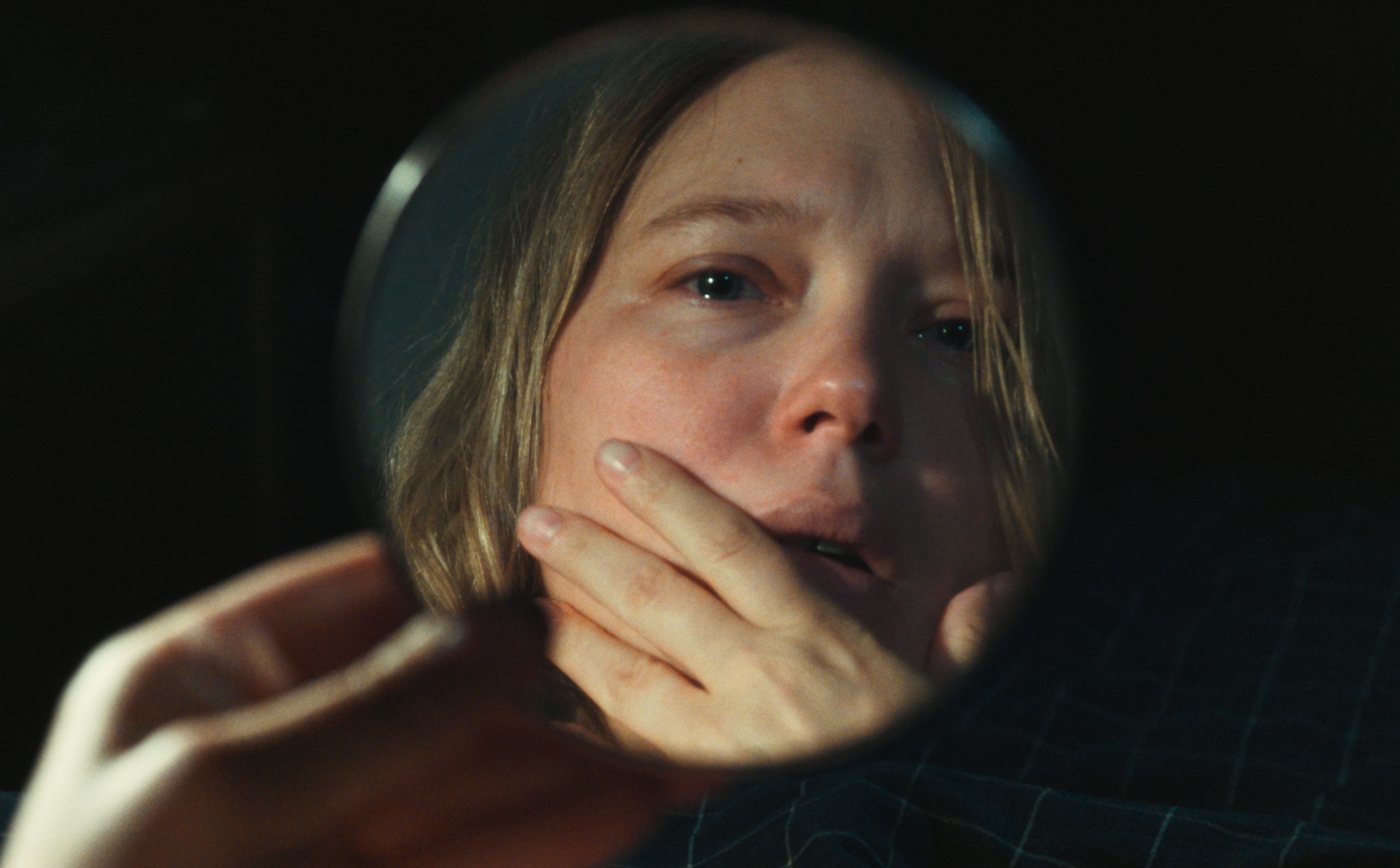
A film like Arthur Harai’s The Unknown is what happens when you have a decent idea – a body-swap pseudo-horror picture – and absolutely no clue how to stretch it out to the two-hour mark. Based on The Strange Case of David Zimmerman, a graphic novel Harai wrote with his brother, it follows a photographer (Niels Schneider) who winds up in another person’s body following a sexual encounter at an art exhibition/bacchanal. He’d recognized the woman, Eva (Lea Seydoux), from across the room, having watched her get unceremoniously dismissed from a waitressing gig a few weeks earlier and photographed her in her shame. She’s stolen his body, goddamn it, and he wants it back.
The only problem is, like the sexually transmitted haunter in David Robert Mitchell’s It Follows, the cycle just doesn’t stop with one person. By the time David-Lea catches up with what he hopes is Lea-David, a new party has been added to the mix – Malia (Lilith Grasmug), who had her own brief encounter with “David” after a concert. Whatever it is that’s causing the body-swaps, it’s closer to a one-way ticket than they might hope. David-Lea and Malia-David form a strange little bond that evolves into something closer to co-dependency than romance (after all, they are the only people who know what they’re going through), but these circumstances would weigh heavily even on the toughest people. One of them will break and do something irrevocable. The question is, who?
Best known on these shores as the co-writer of Anatomy of a Fall, Harai has had a longer and more interesting career beyond that one (quite significant) accomplishment. Yet, though it can be effective scene by scene, The Unknown doesn’t quite come together as a whole. It’s a film of “ideas,” but it begs for credit for simply posing them, presenting the audience with intriguing ideas and circumstances while offering little exploration of their application. Harai wants to literalize the consequences of voyeurism, emphasizing how much one takes for granted in their conception of “the self” until their lineage and history are pried away. Really, it’s a Rorschach blot, presented so the viewer can wring out a workable meaning. That’s a tall order—it lacks weight, too emotionally stilted to have a visceral impact, with intensely aestheticized archetypal characters about as deep as puddles and barely recognizable as human.
Seydoux, per usual, gives it her all, but Harai mostly asks her to be intense, to give the story and situation the heft it otherwise lacks. The same goes for Schneider, who at least gets a dynamic secondary character to inhabit once the bodies are swapped, but he’s forced into a bind by the characters’ expressionless constipation. Their stakes aren’t grounded in recognizable truth, and the filmmaking doesn’t help much, despite the handsome compositions and well-composed score. The most impactful moment beyond David’s initial discovery of his circumstances is a fantasy, which comes far too late to generate any momentum. And, frankly, it’s not as horrifying as it should be – one particularly upsetting scene is undersold in the edit – and an even stranger possibility is left on the table at the conclusion. Knowing The Unknown, though, chances are it most likely would have been worse.