
Editor’s Note: Vanyaland film editor Nick Johnston has left the country, posting up this week in the Great White North to cover the 51st Toronto International Film Festival. As usual, and perhaps now more than ever, we wish we were up there with him! Check out our continuing 2026 coverage, get rolling with our official curtain-raiser, and revisit the complete Vanyaland coverage archives from past TIFF editions.
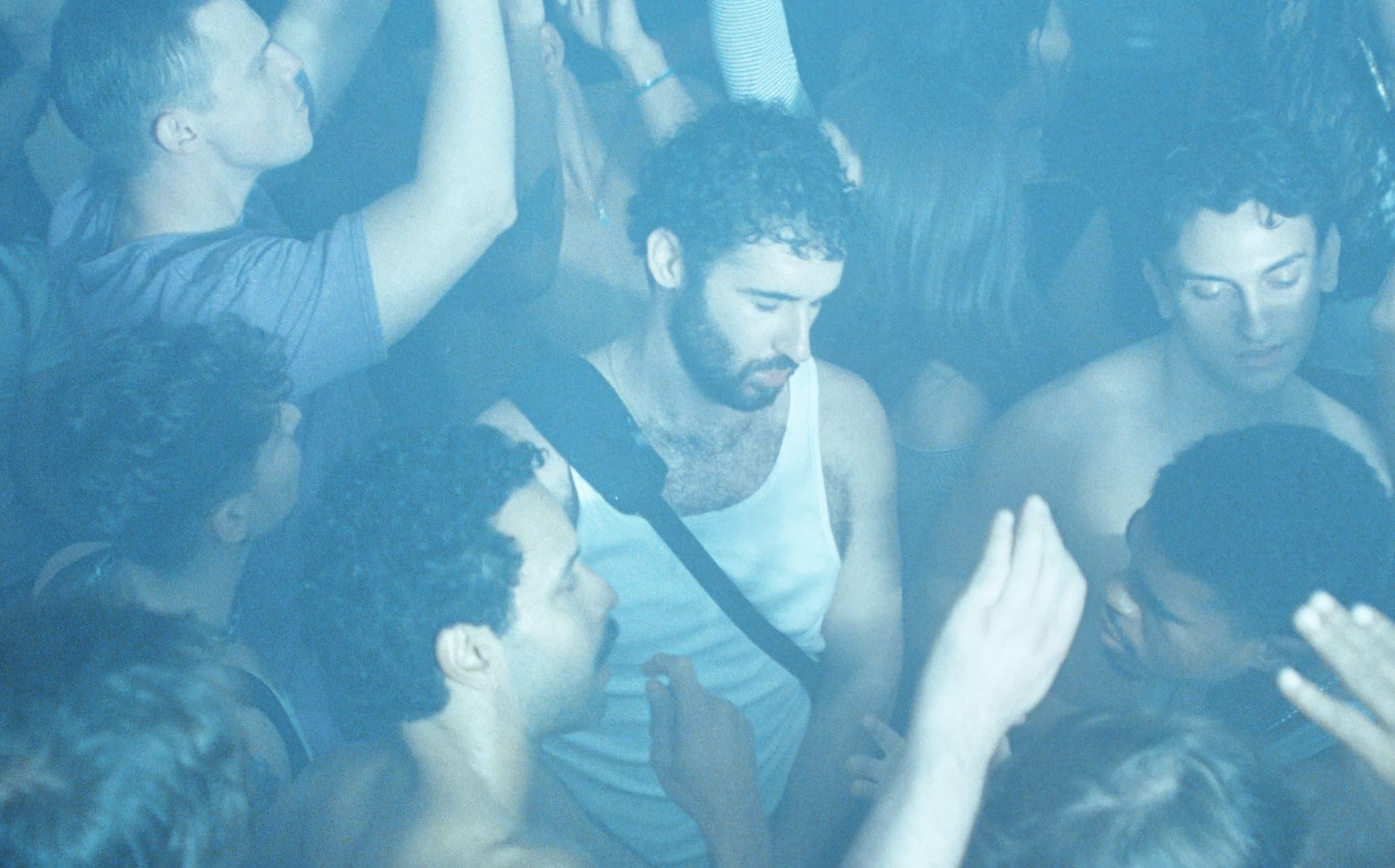
Jordan Firstman’s Club Kid is one of those movies that makes you feel like a professional killjoy if you don’t vibe with it. One only needed to be in the crowd at the TIFF press screening to have seen exactly why — there were loud, boisterous laughs; claps and approving snaps; plenty of tears shed and tissues reached for; and a long ovation once the credits finally rolled. It’s easy to see why it killed. Firstman has crafted a lean-and-mean heartwarmer, being the kind of movie Hollywood doesn’t even make about straight people anymore, much less the vibrant queer club scene that he so richly depicts here. It’s charming through and through, and though it gets sad, it never quite becomes difficult. That’s the appeal and the problem: It forgoes depth for surface-level satisfaction, and achieves its goals in a broad crowd-pleasing fashion without doing the work that would give it more heft. But, again, does that really matter?
If there’s anyone on the planet who knows how to please a room full of strangers, it’s Peter (Firstman), a club scene veteran who’s been working a dance night for the better part of the last 20 years. The dude hustles, having both the innate likability and need-to-be-liked to draw folks in, and he’s made a name for himself by trading on a few facts. First, the music will be good. Second, the vibe will be right — venue, lighting, strobes and so on. Third, his blow won’t have fent in it. Fourth, you’ll probably get laid at a party (or the after party) that he’s running with Sophie (Cara Delvigne), his business partner and longtime friend. He’s pretty proud of his gold-star status, as well. Or, well, until it’s revoked one day by a random British club goer who tells him he’s got a 10-year-old son that he needs to take care of. Conceived in an ill-advised bisexual threesome a decade earlier and brought to NYC following his mother’s suicide, Arlo (Reggie Absolom) is an understandably shy little dude, who, initially, seems to have nothing in common with his fast-talking father. But Peter’s got no room to wriggle out of this jam, and, weirdly enough, he’s got a rent-controlled apartment with the space to house a growing boy. So, reluctantly, he takes Arlo under his wing, and decides to do this whole “parenting” thing, lest the kid go back across the pond to his abusive step-father.
In a stroke of absurd fortune, it turns out that Arlo is the coolest little dude in the world. His favorite band is the Cocteau Twins. He likes to skateboard. He’s enamored with Peter’s lifestyle, and is cool, turning social faux-pas in the scene into endearing bonding moments for him and the community at large. He’s also got natural DJ skills, and soon is spinning records at bars that would otherwise get shut down if the licensing board knew there was a kid in there. About the only two strikes against him are that he’s got a dairy allergy and an anger-management problem that appears in one scene and then vanishes from view for the rest of the film. Oh, I forgot: His social worker (Diego Calva) is hot and interested in Peter. So, yeah, it’s a pretty good deal — the filial equivalent of getting a Ferrari for agreeing to go to rehab. Arlo’s so cool, in fact, that it makes Peter consider giving up the whole lifestyle to settle down and do something with his life. The only problems, well, are that Arlo’s a flesh-and-blood kid who isn’t a US citizen and has folks who care about him in the UK. At any moment, the new life that Peter’s working towards could disappear in a puff of legalese, and the one relationship from which he draws a new sense of meaning could be forever curtailed.
Again, Club Kid is an impressive debut feature. Firstman manages a large ensemble, works with cinematographer Adam Newport-Berra to create an authentic yet personal visual style, and innately understands what the audience wants and hopes for. He delights and denies in equal measure, provides a hearty laugh before breaking your heart, and sees the best in all of his characters, no matter how poorly they might act. The inauthenticity of the story is frequently countered by the earnestness and gentleness with which it is told, and Firstman’s performance is quite good as well, which is by no means an easy feat when you’re directing yourself. There are lots of beautiful little grace notes — a scene in which a group of clubgoers recite Nikki Minaj’s “What’s good, Miley?” VMAs moment word for word, the collection of hilariously inappropriate-for-children shirts that Peter tries (and fails) to prevent Arlo from wearing (“I Heart Bjork and Bareback”), and so on — and they all work wonders to enhance the power of the film’s conclusion.
Yet I just couldn’t buy into it as fully as the people next to me, who were legitimately echoing lines immediately after they were said, and who sobbed through the last half-hour. It is all just so goddamn easy that it never fully rang true to me, and it’s a movie exclusively focused on Peter’s walking the path to proper heteronormative adulthood a decade late rather than, you know, him forming a bond with his son. Arlo is less of a character than a collection of traits designed to mitigate the challenges of parenthood, as any real friction between the two of them might disturb the myopic focus on Peter’s latent cultivation of self-esteem. It’s bizarre to say this, but one could make a similar film in which Arlo were replaced by a friendly cat, and it would probably be a little less contrived. That’s not to insult Absolom, who is a delightful and charming young actor with a screen presence that makes the film work, but I do think he — and Firstman! — could have handled the challenges that a slightly more complicated film might have presented. I just wish his character was a person, full of the inconveniences and quirks that any child, much less one who would be thoroughly traumatized by what Arlo went through, would have.
Club Kid is designed for the type of viewer who rolls their eyes at the idea of a deadbeat-and-son feature, who forgets all of the times that story has worked like a motherfucker on screen. It does so by reinforcing its tenets in a new and more authentic setting than by working to change them, and that’s the appeal — Firstman gives the people what they want, and he succeeds at all of his goals. I just wish he’d aimed a little higher, because he’s capable of it, and could have turned a good debut into one of the all-timers. Alas, he’ll have to settle for making a hit, being the talk of Cannes, and endearing himself to everyone at TIFF. Yeah, I think he’s definitely taking script notes at this point.