
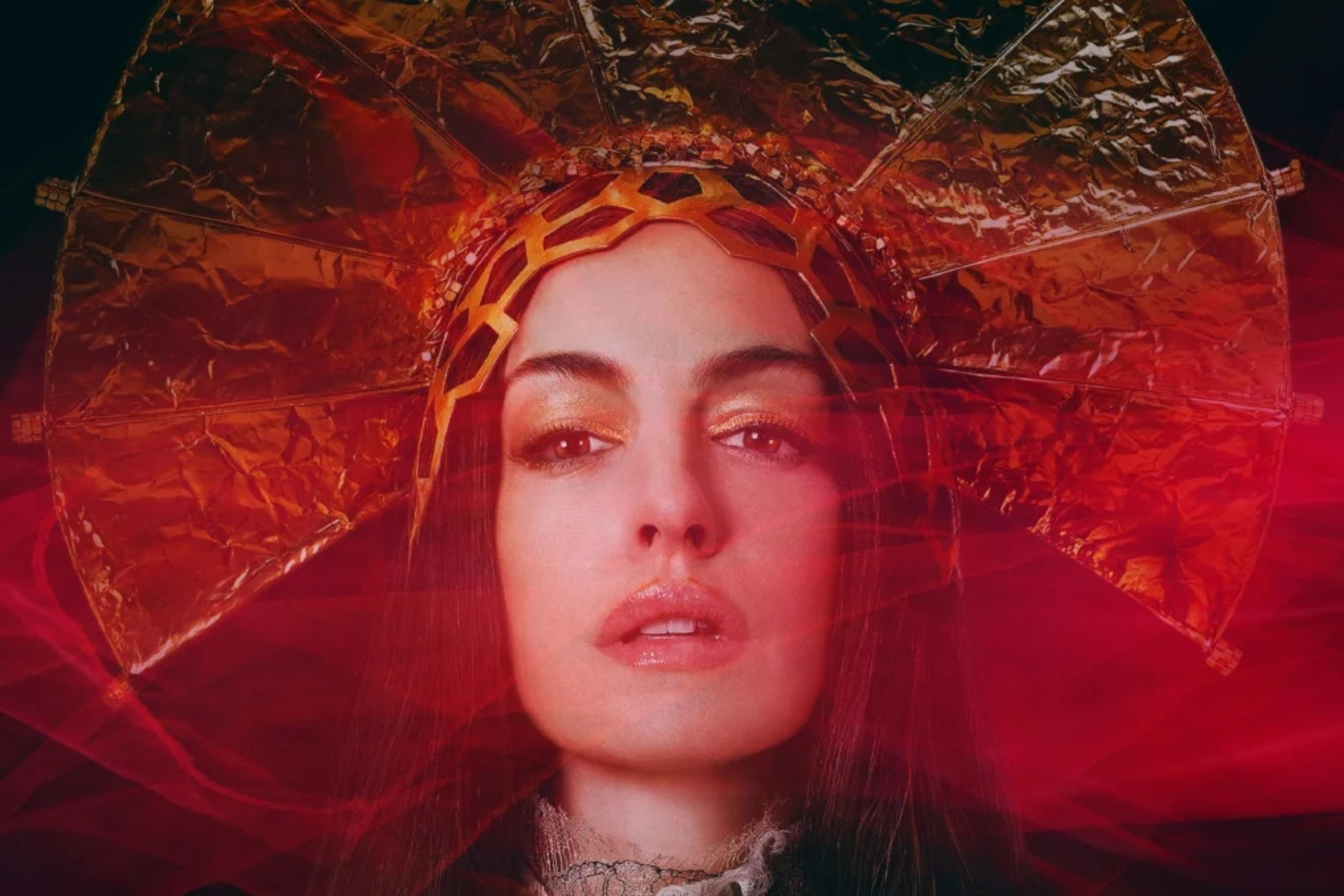
I think we’re about to hit the saturation point of “elevated pop star” movies, as they’re getting as untenable and cliched as their “elevated horror” counterparts. We’ve had two this year, and we’re going to get even more – the boutique with-it skewering of artist and audience, an in-group signifier meant to prove to the most serious people on Earth that they can take a joke (they can’t). Some will stray towards comedy (The Moment), others melodrama (Vox Lux), and, of course, some, like David Lowery’s Mother Mary, will just revert to the mean and make “elevated” horror. One could see this as Lowery’s first attempt since Ain’t Them Bodies Saints to make a proper adult-oriented feature (A Ghost Story’s potent childhood imagery and fable-like qualities keep it youthful, The Old Man and the Gun is too winsome, and, no matter the amount of cum-covered hands, The Green Knight is still too wide-eyed to be defined by its anhedonia), and, man, some folks really should just stay children at heart, lest they lose the skills that make their works meaningful.
Mother Mary is about the symbiotic relationship between a pop star and the people, or in this case, person, who help to form their image, have whatever praise they receive for their work attributed to the star they work with, and ultimately get left in the dust once it comes time for the diva to move on to a new style or sound. In this case, the star is Mary (Anne Hathaway), a singer cast from the Madonna/Gaga/Charli mold who is on the verge of a nervous breakdown, and the aggrieved former partner is the designer Sam Anselm (Michaela Coel), who created an image to sync with Mary’s sound. Years earlier, Mary fucked her over and moved on, and Sam’s spent the intervening years stewing, even as her own brand has grown in esteem. Yet, right before Mary’s set to return to the stage – a huge deal, given the circumstances for her leaving it – she freaks out on her current designer, flies to England on her private jet, and shows up at Sam’s country manor, begging for her help. Sam is, understandably, mad as hell and spends some time tearing into her former friend before a shared supernatural experience suggests to them that something else might be going on with Mary, and that Sam might be the only person who can help save her from dark, unknown forces.
If you’re hoping for the ghosts of Tim Gunn and Heidi Klum, you’ll be disappointed; if you’re thinking you might get something either scary or insightful, you might want to lower your expectations. For whatever reason, when making his entry into the “elevated horror” world proper (and I would disagree with the characterization of A Ghost Story as being a member of that genre), Lowery decided to front-load the film with dialogue, which just isn’t his strong suit. His writing suffocates what little life or fire exists between the two leads, and there’s just so much of it, mostly delivered by Coel, interrupted occasionally by teary-eyed protestations and revelations by Hathaway, who saves her voice for the Charli b-sides that make up Mother Mary’s songbook. I’d listen to Coel read nearly anything, as her mellifluous voice can make even the tinniest dialogue sound like poetry, but asking her to hold up the entirety of Mother Mary’s first hour** is just unfair when Lowery’s trying his hardest to write melodious, specifically British jabs and cuts. It’s intended to be hypnotic – a long-awaited, suspense-filled airing of grievances – yet it’s mostly tedious.
That feeling doesn’t abate once Lowery gets into the magical-realist portion of the feature, where a cracked wisdom tooth, transformed into a spectral red cloth, soon possessed by a spirit summoned from a Ouija board (by FKA twigs, no less), has the power to end Mary’s career as she knows it, or at least force her demons to the surface. This is… fine, I guess, but Lowery’s sprawling, taught imagery can’t catch a breeze, and it never really sails anywhere. Hathaway’s nervous breakdown starts to take on the aesthetic of the Skyfall opening credits; the “body horror” feels like an empty echo of Peter Strickland; and the final product – the dress to end all dresses – would likely be passed over by Boots Riley’s boosters on the rack, not worth the hassle to steal. It’s absurdly disappointing, given Lowery’s track record as a stylist who could craft an evocative image out of humdrum sheets and gardens, endowing the mundane with a sublime importance nearly as potent as William Carlos Williams’ red wheelbarrow.
It’s cool that Lowery wants to zig where he formerly zagged, but it’s hard to feel exactly where his interests lie, even if one can clearly see where his sympathies do. He can operate within strictures – you don’t get three Disney features greenlit if you can’t color within Mickey’s lines – but even then, he always seemed to find a hook, visually and emotionally. This is true of his movies that I don’t particularly care for, as The Green Knight is nothing if not infatuated with Lowery’s interpretation of the text and the fantastical world he created to support it. Mother Mary lacks that drive, and worse, it feels like it was totally meant for the stage before someone swooped in and suggested it’d be better off as a feature. That’s a symptom of the single-location setting and the dialogue-heavy script, but it also stems from distance – Lowery’s never been quite this far removed from his work, and that kind of coolness failed him this time.
* One can tell how much esteem A24 holds for a particular director by whether they can cold-open with some “spooky shots” before the studio’s logo zooms out from stage left, and Lowery’s apparently earned that right.
** I mean this. It’s approximately 60 minutes into the film that we get what would be a first-act conclusion, and the story moves out of park into a sluggish first gear.