
Editor’s Note: Vanyaland Film Editor Nick Johnston back on the ground in Utah covering the 2026 Sundance Film Festival for the grand finale out in Park City. He’s already very busy. Check out our preview of the 2026 festival; keep it locked to our full coverage of Sundance reviews from this year’s festival as they go live, and check out our full archives of past editions.
Contrary to what the millions of shorts on YouTube might suggest, documentaries are very hard to do well, especially when it comes to retrospective evaluations of an artist’s career. After all, the most memorable music docs are contemporary, having the fortune to follow their subject at a pivotal point in their career (Don’t Look Back, Ziggy Stardust, The Kids Are Alright), record a specific performance (The Last Waltz) or, as is most often the case, have the person’s involvement in ways that ensure their rigid conformity to conventions — talking heads, message control, and so on. This isn’t meant to be an insult: They’re often interesting, edifying, well-crafted works within their genre, accommodating a broad audience as possible. When writing about movies like this, film critics often moonlight as their cross-section counterparts, the filmmakers and their craft regarded as an afterthought in favor of engaging with the subject and their legacy. When a movie disregards these conventions entirely — Brett Haley’s Cobain and Bowie docs, and now Broken English, Jane Pollard and Iain Forsyth’s joyously odd portrait of Marianne Faithfull — we get something special, regardless of whether or not it “works.”
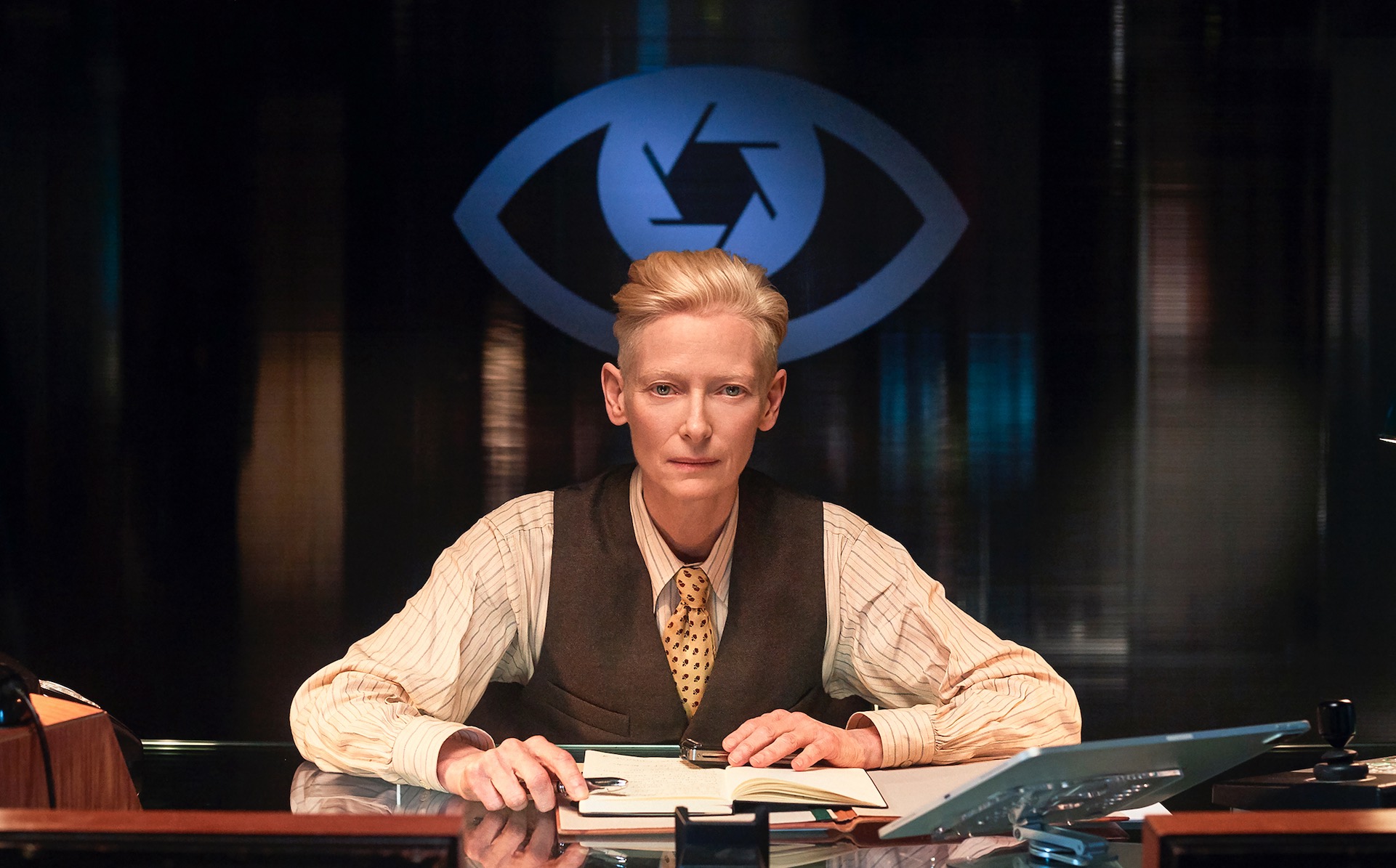
Surrounded by a framing story, in which “The Department of Not Forgetting” (not “Remembering,” of course ) led by Tilda Swinton looks to find their perfect first subject, Broken English is essentially a conversation between Faithfull and an effervescent George McKay, playing the researcher tasked with collecting her perspectives on her wild, often misunderstood life. It’s buffeted by archival footage from her nearly 60-year career and scenes, where the usual bands of talking heads either have conversations (such as a scholar-heavy panel discussion) or perform, with most figures left untitled — either you recognize that Nick Cave or Courtney Love is in the studio, or you just sit back and enjoy it for what it is. The filmmakers’ theses, pronounced by Swinton in short vignettes, are remarkably direct, eschewing the subtleties of having to launder one’s perspective through an expert without succumbing to didactic first-person narration. There are sets, for Christ’s sake, intricate ones that feel lifted from a Gilliam-esque “Very English Dystopia” being filmed on the next stage. To make a long story short, this is as much of a production as most similarly-budgeted narrative features, and its ambition suits its subject.
That, for many, might be the rub. Faithfull, as anyone who has ever watched British television, was a delightful and candid interview, and though the ravages of age and illness were well-apparent — she required the usage of an oxygen tank during her sessions with McKay — her wit and capacity for self-reflection wasn’t dimmed in her final months. Her brusque dismissal of chauvinistic journalists (“Fuck ‘em.”), her sly jabs at Jagger (her reaction to a clip of her saying, at a much younger age, that she couldn’t imagine the Stones playing “Satisfaction” at 38), her joke about her comeback record being Broken English give how well the title described her state at the time — it’s great to see her, encouraged by McKay, open up even further. That’s the main complaint: Other than for very obvious practical reasons (such as the doc still being in production when she passed), why cover that light with an admittedly well-decorated bushel?
This, I imagine, has to do with her love of Brechtian absurdity. She delights at the filmmakers’ discovery of footage from the time she acted in a production of The Seven Deadly Sins, and one of the best performances presented in the doc is of her singing “Pirate Jenny” on a television program, each “shit” spewed with theatrical yet grounded acid. The interiors could not be more different than the eras we associate with her — swinging London, new-wave neon — and it aesthetically illuminates the vibrancy of her existence by contrast. Some of the segments don’t have her presence or McKay’s joy or Swinton’s staccato intensity, and they’re the ones that color the more frustrating aspects of the film — we really do not need a Jehnny Beth faux-music video for this to hit 90 minutes — but they don’t stop the film from hitting its mark. When Broken English ends following her last recorded performance, a short studio session with Cave and Warren Ellis, you feel the incalculable loss: That, as the 20th century continues to fade into the distance, we cannot forget the wonder of an analog, unexpected life.