
Editor’s Note: Vanyaland film editor Nick Johnston is in Canada all week covering the 2024 Toronto International Film Festival. And as usual, we wish we were up there with him! Check out our continuing TIFF 2024 coverage, read our official preview, and revisit our complete archives of prior editions.
After spending time in the horror trenches making updates to the Halloween (mostly pretty good) and the Exorcist franchises (oh boy, yikes), David Gordon Green returns for another drink at the fully-tapped well of Hollywood cliché. No matter how you slice it or how good the movies are individually, his Hollywood work consists of a series of well-trod paths, aside from Your Highness, which no audience member ultimately went down at the multiplex when it came out. At least the horror films were specifically IP-driven endeavors and not just riffs on ancient plots — Pineapple Express (buddy comedy), The Sitter (Kids-Say-The-Darndest-Things Comedy), Our Brand is Crisis (political awards-hungry dramedy), and, now, Nutcrackers. Put on Kenny Rogers’ “Love Will Turn You Around” because Gordon Green and lead Ben Stiller are going down the Six Pack path.
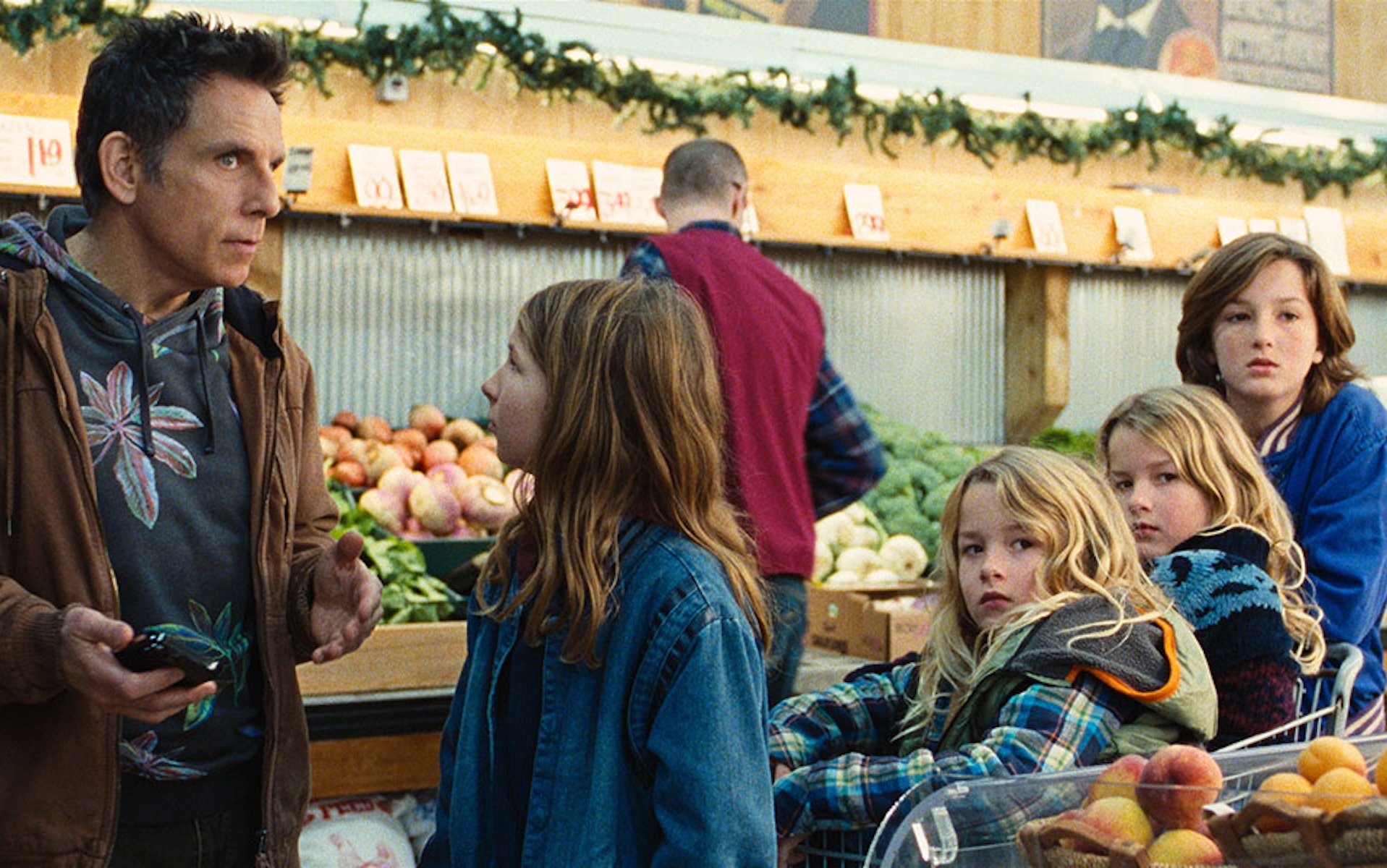
I mean that in a reasonably serious way: This is one of those movies in which a responsibility-free yet work-oriented older man comes into possession of a bunch of children. In Six Pack, they’re orphans; in Author Author, they’re step-children; and in Nutcrackers, they’re his orphaned nephews. He’s got to learn how to love these kids and help ‘em out, or they’ll be lost in the foster system, forced to hawk newspapers in pageboy caps on street corners or resort to stealing penny farthings from purses in Piccadilly. Our responsibility-free man in this situation is Michael (Ben Stiller), a VP at a real estate company who is immediately asshole-shaded from the minute he first appears on screen in his yellow Porsche, ripping through the streets of on the outskirts of Nowhere, Ohio. He’s got a big deal coming up in the future, and he sure as hell doesn’t want any loveable rascals making him realize the beauty and joy of family and the benefits of being a foster parent. Or does he? Spoiler alert: He does.
The nephews – played by Homer, Ulysses, Atlas, and Arlo Janson, who are brothers off-screen, in case you couldn’t tell from their shared last name – are practically feral hellraisers who, in the film’s opening sequence, get caught breaking into an amusement park and hijacking some of the rides. Mike doesn’t want anything to do with these kids, but their social worker, Gretchen (Linda Cardinelli), wants him to try and stay for a while until she can find a suitable home to place them together. He’s terrible with kids, he’s busy, and he’s also nursing his grief – the boys’ mother was his once-beloved sister, who traded away a life of international success and acclaim as a ballerina to open a small-town dance studio after her crunchy husband decided he wanted to go into the ice-cream making business on a working farm he bought after the family escaped from a cult. Yeah. So, Mike’s got to wrangle the farm animals and the kids while he heals to decide what’s best for his nephews and himself. You know how this goes.
There’s one big overarching problem with Gordon Green’s career as a feature-length comedic filmmaker, and that’s that his horror movies are genuinely funnier than any of the shit he put out while working under Apatow. Chalk it up to Danny McBride writing the scripts, or the luxury of the R-rating, or, with regards to his unimpeachable work on television, Jody Hill steering the ship for Eastbound and Down, Vice Principals, and The Righteous Gemstones – despite all three being credited here as producers, there’s a key ingredient missing. I think it’s that Gordon Green works best with either a feather touch (his early independent work and even his later dramas have a true sense of grace to them) or the balls-to-the-wall extremity of his horror features and a mid-budget balance between these extremes will genuinely satisfy no one.
Perhaps there’s a compelling drama here – it’s undercut by the humor, which is rendered in an Altman-esque fashion, meaning that, in his hands, the sound mix makes it impossible to separate one bit of dialogue from the cacophony. The boys constantly shout over one another, with Stiller as a punctuation for us to summarize the previous babble. Perhaps there’s a funny comedy buried here– it’s undercut by the drama, which is filmed in Gordon Green’s typical fashion, a kind of anesthetized hybrid of early Malick and later Linklater. It’s never as fast or as witty as you’d hope it would be, but it is full of pratfalls, fart jokes, and Ferrell-esque destruction.
So, this is the issue: Aiming to make a film for the whole family is a slippery endeavor than you’d assume otherwise: the adults will roll their eyes at the humor here, and the kids will be bored to tears when they should be being moved, and the grandparents will likely sleep through the entire fucking thing undisturbed. What it feels like, I’d say, is a Netflix-style attempt to reboot the Fockers franchise without any of the zaniness that made those films compelling. You’ve got a stuffy Ben Stiller running around with a bunch of wild and crazy kids (and if anyone is good in this, it’s the Janson brothers, who are some of the most authentic child actors seen on screen this decade) whose relationships remain undefined well until the third act when Gordon Green yadda-yaddas over a whole bunch of bonding between the four boys and their potential foster Dad so that he can get to the dance routine finale (there is a reason it’s named Nutcrackers after all, and it’s not about Stiller getting cup-checked).
There’s a decent reason this type of story died out: They hit every maudlin note on the way to a saccharine conclusion unless they are novel or funny. An excellent modern example of both is Instant Family, which regards the foster system as an imperfect solution to impossible problems rather than a boogeyman of exploitation and cruelty and is decently affecting in its own right. This is why I keep circling back to Six Pack: Gordon Green made that movie 40 years after its sell date, without that banger of a Kenny tune to hum as you walk out of the theater while the credits roll. Instead, you’ll have to watch the movie’s arcs get resolved over a picture-in-picture montage during the fucking credits – a trend I legitimately cannot stand, especially when it comes after a The End title card.