
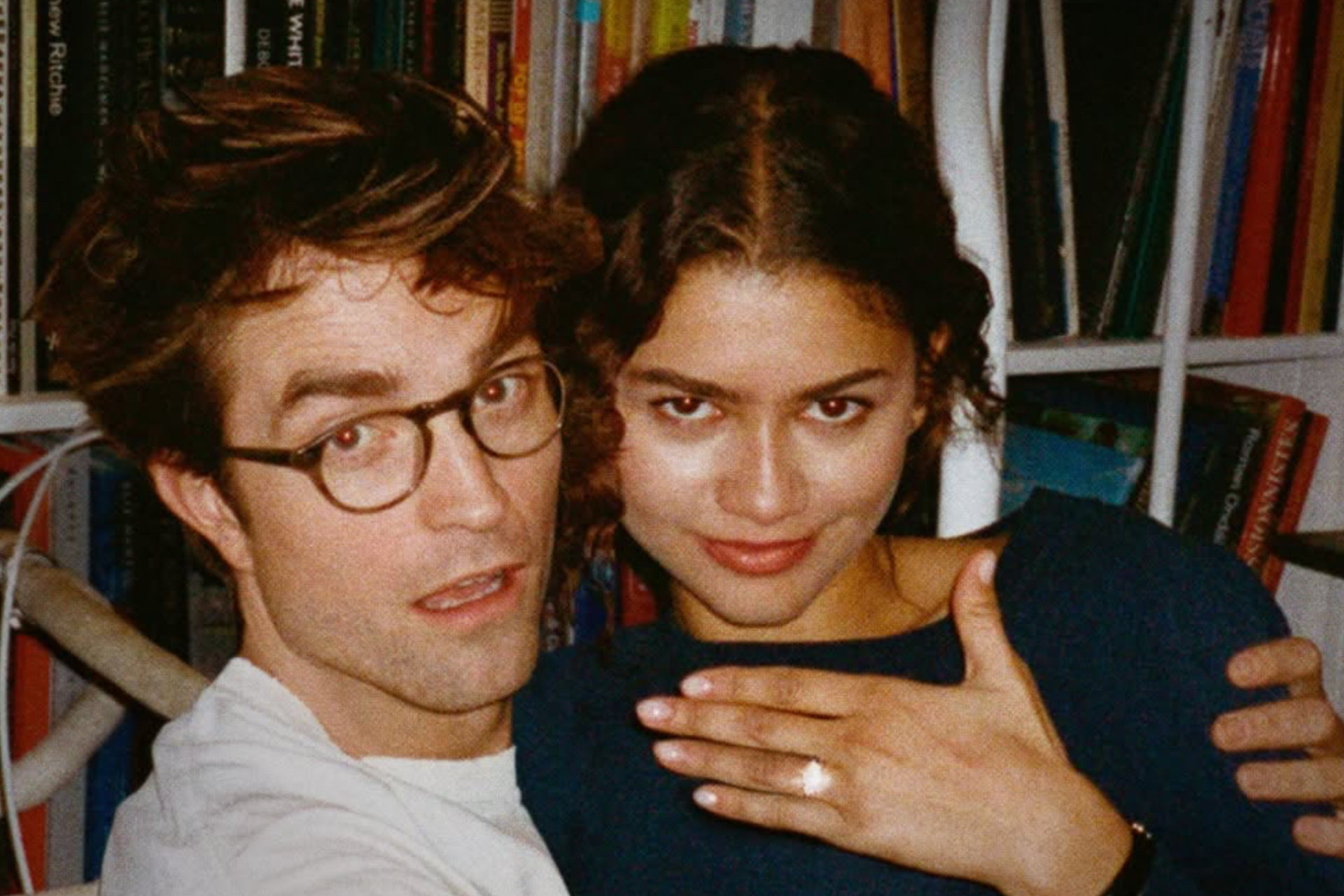
Every writer worth their salt has a thinkpiece cued up for next Monday morning about how well (or how poorly) Kristoffer Borgli handles the Big Reveal in his new feature The Drama, but I doubt many of them will talk about one truly important detail – it’s probably the best modern “Boston” movie to deal with the city as it exists for residents of Beacon Hill and Back Bay. Let’s face facts: Despite all of the movies shot in this city, folks still think of The Town or Ted, which is no insult to those two titans of non-rhotic American cinema. Tourists come here wanting the Dropkicks, legal weed, tri-corner hats, and green beer served year-round, plus the occasional robbery at Fenway Park intercut with a Roman Anthony dinger. What they ultimately get is Tatte, our homegrown Caffe Nero, serving shockingly overpriced (and actually pretty good) pastries and coffee in white-tiled faux-European dining rooms so clean and well-lighted one would think twice about doing anything rash when they got back to their hotel room. This is more important to how The Drama works than it might appear at first blush, and it’s why, for local audiences, this might just be one of the funniest movies of the decade.
Back to Tatte for a second – that’s exactly where Charlie (Robert Pattinson), a terminally nervous archivist, first noticed his soon-to-be bride, Emma (Zendaya), and he made what might be the world’s most awkward attempt to flirt with her. He recounts the details to Mike (a perfectly-cast Mamadou Athie), his best man, while they’re working on Charlie’s reception speech, and one can’t help but be struck by how Rom-Com it is. In an effort to find something to talk to her about, he looked up the book she was reading, pretended to know what he was talking about, and sidled up to talk to her. She had her headphones in, ignored his initial overtures, and he panicked, noticing everyone around them staring. His mind had already shifted towards imagined consequences for this devious transgression of trying to talk to someone in public – what will they say or think? – right before she notices him, takes out her earbud, and mentions that she didn’t hear anything (she’s deaf in one ear). Voila. Marriage material.
To be perfectly fair, Charlie and Emma have a solid relationship. She’s steely, he’s nervous; he’s tender, she’s slightly aloof in her own way; he’s gregarious, she’s a bit of a loner. She, in his words, “knows how to turn [his] drama into a comedy.” They come from very different backgrounds – Charlie’s British, Emma’s an army brat who spent much of her teenage years in Louisiana – but they’ve made a happy life together, and they’re ready to take the next step. Yet, as these things go, someone gets cold feet the week before they walk down the aisle, though it’s not necessarily for the reasons most people do. While sampling wedding wines and catering with Mike and his wife, Rachel (Alana Haim), the conversation drunkenly steers towards a potentially rough subject matter. What’s the worst thing you’ve ever done? Mike used a college-era date as a human shield when they came across a stray dog on a walk; Rachel, as a child, locked another kid inside a closet in an abandoned house and left him; and Charlie struggles a bit before settling on some cyberbullying he did as a teen. It’s only when Emma reveals her “worst thing” that the mood totally shifts, and Rachel essentially flips the table over.
Now, it’s important to keep in mind one thing: unlike the others at the table, Emma never went through with her “worst thing,” and even used it as a source of growth and enlightenment. Charlie understands this intellectually, but he can’t help but be tormented by it: is the person he’s planning to marry capable of still doing something like this, even if she only thought about it? He starts to see examples of this thinking in her character, and it’s compounded by Rachel’s ongoing rage (she’s Emma’s Maid of Honor, and is essentially threatening to blow the whole wedding up) and Emma’s grief at having said anything in the first place. What follows is a comedy of errors and manners, in which Borgli crafts brilliantly funny set-pieces out of the trials and tribulations that Charlie, specifically, has to face. His panic and fear, more than anything else, threaten to upend the best thing that’s ever happened to him, and will lead him to cross some, uh, strange lines in his personal and professional life.
Pattinson is fantastic, evoking the sort of buttoned-up goofball that Cary Grant played for Howard Hawks in Bringing Up Baby, only it’s his internal conflict rather than Katharine Hepburn causing him so much trouble. There’s not enough Xanax in the world to calm Charlie down once he gets going, and once the sole person grounding him in some sort of sanity becomes “unstable” in his mind, he starts to go nuts. He’s keen to stress that this is really Charlie underneath it all, having a dermatillomania of the soul, picking at every intrusive thought that enters his brain until it bleeds. He’s paired well with Zendaya, who is both droll and unflappable yet vulnerable, and it’s through this vulnerability that she establishes continuity with her younger self, glimpsed in flashback, in a setting about as far away from the brick-paved streets of Beacon Hill. Their lives are comfortable, much in the way that one might imagine when looking at the brownstones lining Comm Ave, as if they’re swaddled in unsullied white linen.
Borgli uses that canvas of unsullied luxe Boston mod con for drip-painting, evoking both Vinterberg’s Festen and Ostlund’s Force Majeure in its skewering of egos and niceties. In fact, it’s what I imagine Ostlund would have continued to make had he not decided that transportation faux-pas was the perfect metaphor for interrogating class struggle. There are, as Borgli shows here, more productive ways of seeding the same fertile ground than monoculture, though it might get lost in all of the hooting and hollering that may be done over how he handles the Big Issue. For my money, I think he did it well enough, letting the brief shock value of the moment hang over the film like a dark cloud without letting it sink the story’s momentum. One man’s “swell usage” is another’s “flippancy,” so your mileage may vary. The Drama’s look isn’t as florid as Dream Scenario, but it is similarly styled, evoking an ivy-walled worldview and what can happen to it when the rot starts to set in.
Honestly, the only detail that feels truly amiss about how The Drama depicts Boston is that Pattinson isn’t the CFO of a random biotech firm in Kendall Square. Its dynamics are fully realized in the context of this city, specifically in how the couple treats their wedding DJ, who they think they see smoking some heroin near the Common when walking home one night. Charlie nervously points it out to Emma, she resolves to do something about it with his assent, and then, when the moment comes amid everything else going on during the day of the wedding, it’s still up to her to break the bad news and face this woman’s wrath while Charlie breaks down and weeps. Their interactions with every person outside of their small circles are patronizing – until the final scene, in which everything between them is leveled out, and, fully humiliated, they become true Bostonians in the heart of an all-night diner*. There are more apt ego-deaths to discuss, but it’s in this context that I find The Drama to be its funniest, given that it’s one that mirrors the typical transplant’s acclimatization to city life. At some point, one just goes to Dunkin, even when there’s a Tatte nearby.
* It’s a bummer they didn’t get to shoot in South Street Diner, but I imagine that would have been a logistical nightmare given its size.