
Since there are few things worse than reading a film critic describe jokes from a hilarious movie in ways that strip them of their entertainment value, I’ll keep this review nice, brief, and summary-free: Akiva Schaffer’s The Naked Gun is one of the best revivals of a comedy franchise in recent memory. It’s a tribute to the sturdiness of the Zucker-Abrams-Zucker joke-a-second model and the enduring appeal of the ludicrous deadpan delivered by formerly straight-laced acting talent. If the Friedberg-Seltzer crew hadn’t tanked the format by association with all of the Scary/Disaster/Superhero Movies (and I’ll be real with you: once Zucker started directing the Scary Movie sequels, they got legitimately funny — for at least one installment), we might still regularly see these kinds of features on the big screen.
Comedy, it seems, is either meant for streaming or as a pulpit for the kind of hoary moralizing usually reserved for Love Is… newspaper comics. You know, the Judd Apatow “Having children and popping boner pills doesn’t mean you can’t commit minor felonies with the boys on the weekends! You’re still young (at heart!)” shit. The primary animus for most modern comedic filmmaking comes from anxiety and insecurity, at least when it’s not accompanied by a more-obvious genre-chaser (horror, for example), and I guess you can attribute that to the silver-screen comedian’s desire to be taken seriously. This is why Adam Sandler went to Netflix – he can be funny there, and appear on the big screen for a challenge in a Safdies feature — and it’s why great comedy has a home on social media platforms, where the stakes are so low to be inconsequential. The business of comedy is too big to be funny.
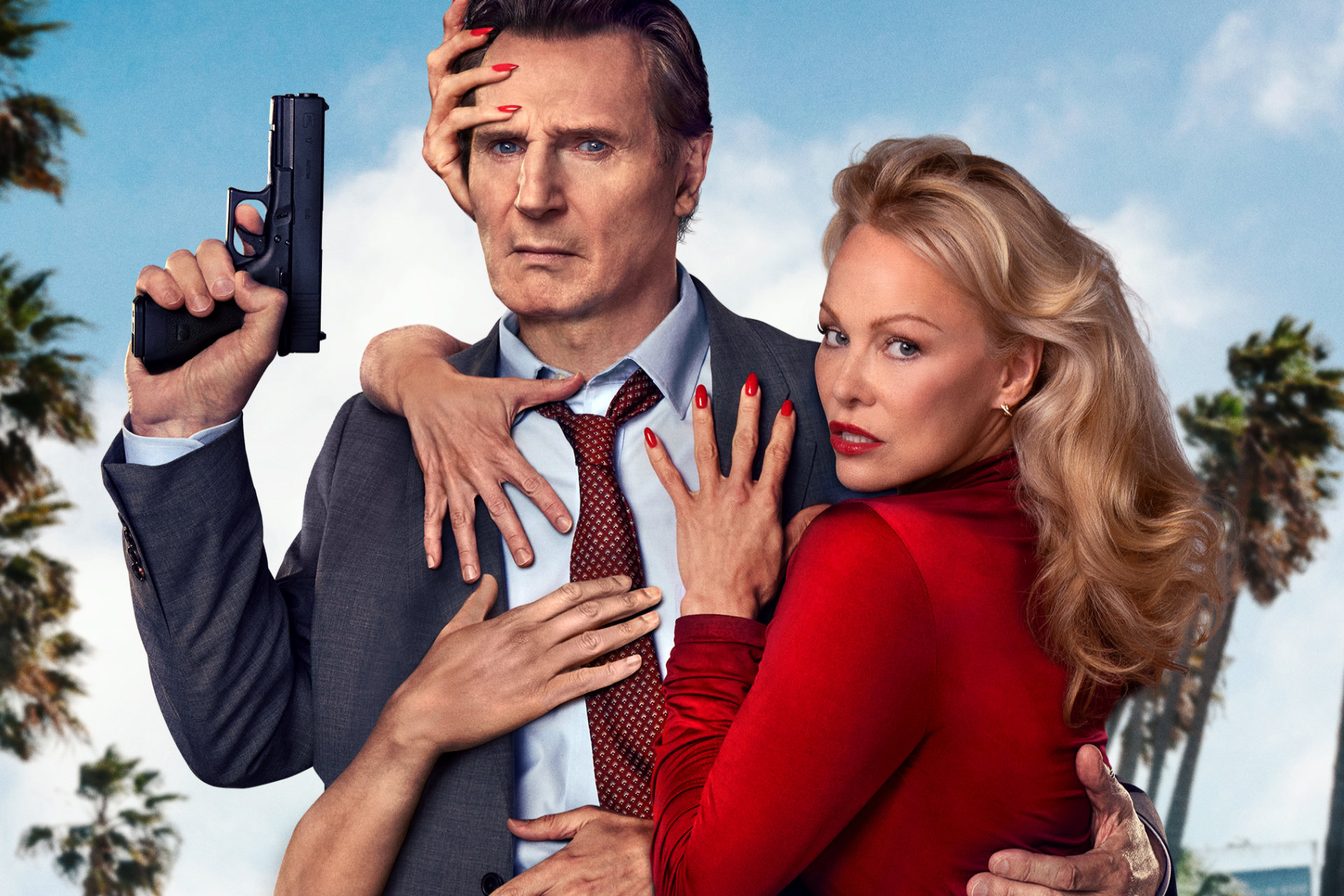
However, the words “anxiety” and “insecurity” have never described Schaffer’s career as a filmmaker. He makes broad, goofy, exceptionally funny features — Hot Rod, Popstar, that Chip ‘n Dale reboot that surprised the hell out of everyone a few years ago when it hit Disney+ — and he’s an extraordinarily skilled gag writer. After all, one doesn’t spend twenty years as a key part of the Lonely Island crew if they can’t nail a joke. Along with co-writers Dan Gregor and Doug Mand, he seamlessly makes the transition from the heyday of Leslie Nielsen and George Kennedy to the modern era of Liam Neeson and Pamela Anderson. He does so without being overly reverential (though there are some reconstituted and updated gags from the prior installments) while avoiding the pitfalls of a full-on “reboot.”
Schaffer never pauses for a laugh or winks and nods at you to chuckle: To do so would cause a jam in the chamber, and the whole automatic-fire operation might blow up in his face. If a gag misses, there’s plenty more in the magazine, but his accuracy is genuinely astounding. If he were target shooting, you’d see some scattered bullet holes around the edges, but you’d likely notice the fact that the head is missing. Seriously, there is something here for everyone, provided one enjoys the feeling of laughing in a darkened, crowded theater as opposed to the smirk that comes with a latter-season Arrested Development episode. There are goofy puns, groan-worthy innuendos, expertly-crafted punchlines, sight gags, pratfalls, and absurdist flights of fancy, all delivered without a hint of pretension.
Yet Schaffer wouldn’t be able to make the film work without his leads, as Neeson and Anderson are a genuinely brilliant combination on screen. He’s always been (secretly) very funny, and his career arc has bent in stranger ways – had you asked someone about the guy from Michael Collins robing up for a Star War, they would have looked at you crazy, much less figured he’d go on to become the patron saint of the B-action movie. Neeson is effortlessly funny, which means it requires a ton of work on his part, as he somehow manages to get through the lines he’s given without breaking. A favorite quote: “Like an idiot’s completed jigsaw puzzle, I was framed.” He’s just so game for everything that Schaffer throws at him, but, like Nielsen, he never ever suggests that he’s in on the joke. After all, he is the goddamn joke, and he’s one of the main reasons you’re here to laugh. What’s better is how beautifully he’s paired with Anderson, who is riding a career renaissance after unfairly spending two decades as a punchline. Everything critics hated about her work in the past is an asset here (and yes, I’ll come out and say that Barb Wire is the funniest possible Casablanca remake), and might even suggest to them that, god forbid, some of her work in her prior movies might have been… intentional? Her comedic timing is incredible, her commitment to the bit rivals Neeson’s, and they make such a charming pair on screen.
If there were justice for comedic performers in the awards scene, they’d both get Oscars. Yet such are the pitfalls of being the leads in a volley against those who’d scoff at either of them outside of these confines. For all of our era’s flippancy and “witty bants,” we are plagued by seriousness: The Jack Kirby panels brought to life are drained of their stylized poetry, the children’s story we adapt sapped of their whimsy, the comedies fables that Aesop might have spun for 40 year-olds who can’t seem to stop using the world “adulting” in polite conversation. As such, we’ve stopped being able to identify seriousness when it matters.
The Naked Gun is seriously devoted to making you laugh so hard that you think you might join Chrysippus of Soli in the “died from laughter” circle of hell, and it goes about its task with ruthless efficiency. It’s 85 minutes of pure bliss, which frequently had me laughing so hard I thought I’d never get another breath in edgewise. So, yeah, Leslie Nielsen can rest easy – Frank Drebin Jr. can fill the shoes and pick up the slack, hopefully for ten more of these. Bring on the sequels. Please. Please.