
Editor’s Note: The Independent Film Festival Boston, or IFFBoston for those with things to do, has just wrapped up its 2026 program, with a flurry of films shown at the Brattle, Somerville and Coolidge Corner theatres. Vanyaland film editor Nick Johnston caught the best of the best as they hit the screen, and we’ll be relaying his reviews all week long. Check out all our coverage, including past editions, and revisit his two-part 2026 preview here and here.
Who would have figured that 2026 would be the year Olivia Wilde helped to bring back the sex comedy? From her uh-may-zing turn in Gregg Araki’s I Want Your Sex to her latest directorial effort, The Invite, it’s clear that she sees a niche that her persona and perspective can satisfy. As a fan of this bizarro and sorely-missed-at-the-multiplex genre, it’s wonderful to see it reemerge in a fashion that Gen Z might be able to stomach without having to ditch so much of what makes it special. If Araki covers the cartoony New World Pictures end of the spectrum with his broad, colorful, and heavily explicit humor, Wilde’s got the adult-contemporary section on lockdown. The Invite is a one-of-a-kind showcase for its four-person ensemble, a reasonably insightful look inside the relationship of a couple on the edge, and very, very funny.
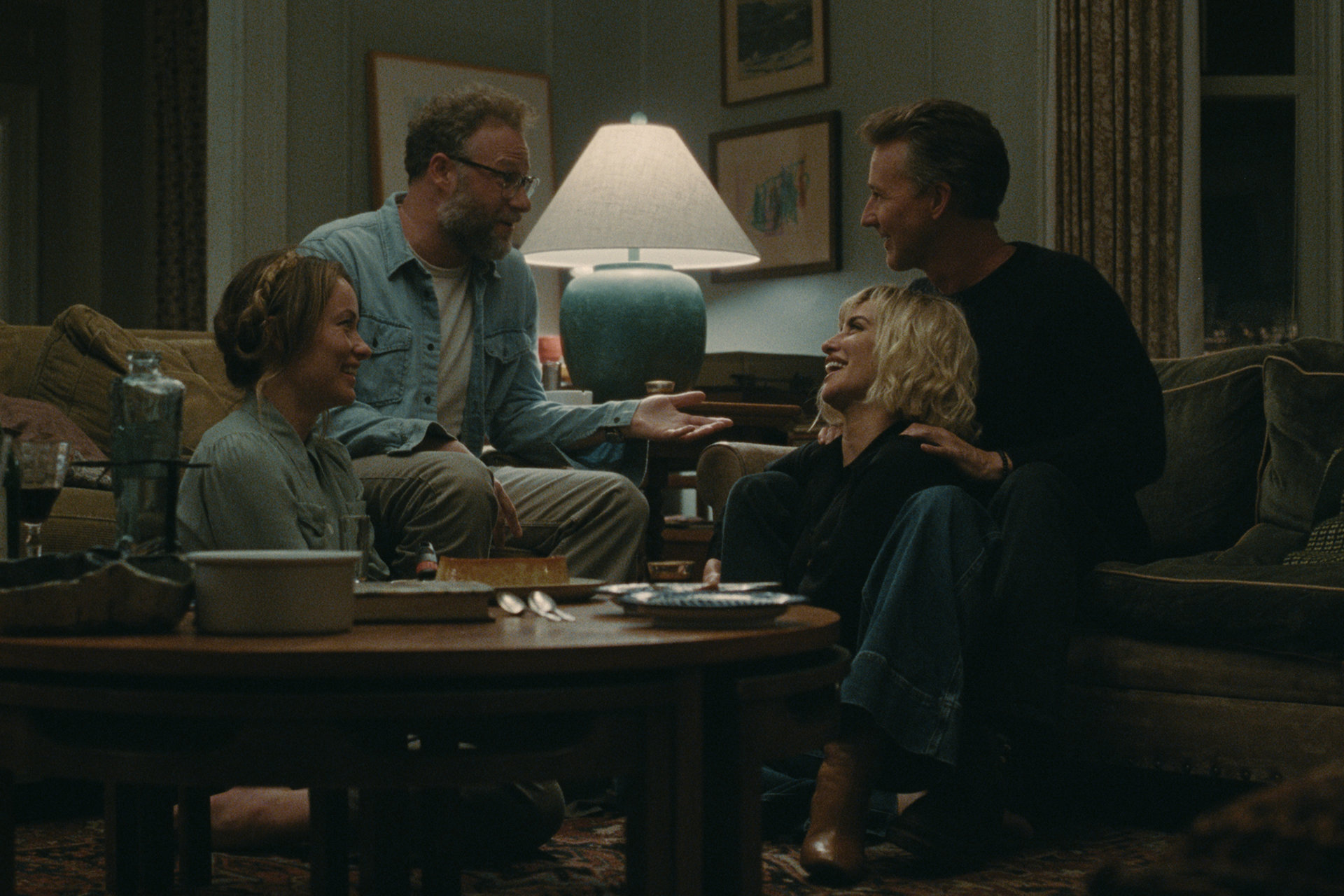
Penned by Rashida Jones and Will McCormack, The Invite centers around what looks to be a typical awkward, gaffe-filled dinner between neighbors in a San Francisco apartment building – there’s Joe (Seth Rogen) and Angela (Wilde), who live downstairs, and Hawk (Edward Norton) and Pina (Penelope Cruz), who live upstairs. Angela, who planned everything at the last minute, has pulled out all of the stops in order to make it a night to remember, and Joe is (unwillingly) along for the ride. She’s curious about their neighbors – after all, they make a real racket when they have sex, so there must be something interesting going on there – and he is infuriated that they keep him up at night (and bother their absent teenage daughter, who is thankfully at a sleepover that evening). They’re nursing lots of anger towards one another, too. Angela resents Joe for his shitty attitude, and Joe hates his life, living in his childhood apartment after his dreams of indie-rock stardom went down like Pabst sales after poptimism. One can glimpse where the love used to be, but it’s buried under layers of sediment-like resentment.
So, when Hawk and Pina show up, a dash of spice is added to the mix, even as Angela’s plans for the evening fall to the wayside – her soufflé burns, her other canapes don’t work with Pina’s dietary restrictions, Joe forgot to get wine, and so on and so forth – because they’re just kind of strange. Hawk’s a retired fireman with a penchant for massage and antique rugs, Pina’s a therapist (and sexologist) who likes to get stoned and listen to Sade. He appeals to Angela, and she appeals to Joe, and their tension eventually boils over into a frank discussion of the noises that keep the downstairs neighbors up all night. Turns out, the folks next door are freaks, and, sure enough, that title – The Invite – refers to much, much more than jamon, manchego, and conversation. Are things gonna get weird? You bet! Well, unless the couples don’t self-destruct before they reach the bedroom, which is an all-too-real possibility.
Wilde has cited Mike Nichols as her big influence on the film, and indeed, it feels like an inverted Who’s Afraid of Virginia Woolf if played for laughs, with a heaping helping of Carnal Knowledge’s frank, acerbic depiction of soft-swap sexuality added for good measure. The pace, however, is where she makes things her own, with an Altman-esque crosstalk that adds layers to the conversations, only revealed with repeat viewings (and also that the subtitle writers will have one hell of a time trying to get every last detail into the captions). Had I time to spare or were I an aspiring screen actor, I think it’d be pretty rewarding to see The Invite a few different times, each time keeping track of what a different performer is doing in a given scene. Personally, I couldn’t take my eyes off Norton, who is just absurdly funny here, at least until he’s given one of the film’s true moments of pathos, revealing the everlasting hurt that led him to, you know, date his therapist and plunge headfirst into The Lifestyle. That moment allows us to understand why this is healing for him and adds so much context to his seemingly smug behavior, offering an alternative reading of his initially sleazy character. It’s his best performance in years, trading off his screen persona in a smart, revisionist way.
Truth is, I think there’s something akin to that for each member of the ensemble, and there’s not a bad turn among the lot. Cruz gets somewhat of the short end of the stick, being the sole “responsible” member of the group, given her position outside of the bedroom, but she’s able to pave over the transition from broad farce to faux-therapy session with only a little bit of judder. Rogen, who is contractually obligated to smoke weed on camera at least once per film (unless he’s working with Steven Spielberg), is our pseudo-audience surrogate, yet he never feels like a stand-in: he’s merely the one character willing to voice how fucked-up some of this seems, with a deeply relatable insecurity in this situation and a hair-trigger that gets set off once these weirdos start to fuck with his records or his piano (not to mention, you know, his wife). Finally, Wilde gives a genuinely funny performance, with her xan-and-booze reactions to various stimuli – still suffused with anxious energy and a piqued curiosity about this exotic lifestyle – expressed wonderfully and often wordlessly. For instance, her delight at remembering the word “pegging” feels fully natural to this character and is superbly amusing.
Her direction is sturdy and solid: she’s an old hand at this now, and doesn’t feel the need to be maximalist, both of which could apply to Booksmart (in which the quieter moments were the best parts of the feature) and Don’t Worry Darling (an exercise in excess, like many second features, that looked cool and fell flat). The edit is strong – you’d be surprised how many of the laughs come from emphasis cuts rather than dialogue, or from off-screen conversation while we’re holding on a close-up of a performer’s face – and the 35mm photography complements the dimly-lit trappings of the San Francisco apartment that it’s set in. Yet this is one of those comedies that I worry about people taking too seriously, much as they did with Kristoffer Borgli’s The Drama earlier this year, to the point that A24 is leaning into the pop-psychology angle instead of trying to mount an early FYC campaign for its cast.
It’s perfectly okay to find The Invite funny as hell without having to worry about whether or not one’s getting a full serving of moral veggies in the process, and whether or not it holds any gravitas should be best left to the viewer to discover on their own terms (or, you know, by reading good film criticism!). Besides, I think more people are going to have full-body cringes from this from sheer relatability than anyone expects, so, trust me: folks have already talked about all this in therapy. Let this medicine do its work.